Bringing a DJI Drone from the USA to India: Customs & Rules 2026
 Sep, 25 2026
DJI Drone India Customs & Rules Estimator
Drone Details
DGCA Registration Requirement
Customs Duty Estimate
Critical Flying Rule Reminder
No-Fly Zones: Within 5km of airports. Always check Digital Sky App.
Enter your drone details above to see if you need a UIN number and estimate potential customs costs.
You just bought a shiny new DJI Mavic 3 Pro in New York or Los Angeles. You’re excited to fly it over the backwaters of Kerala or the ghats of Varanasi. But before you pack your carry-on, there’s a big question hanging over your head: Can I actually bring this into India without getting fined or having my gear confiscated?
The short answer is yes, but it’s not as simple as walking through the "Nothing to Declare" lane. India has strict aviation laws, and drones are treated differently than cameras or laptops. If you don’t follow the rules set by the Directorate General of Civil Aviation (DGCA), you could face delays at customs, heavy duties, or even legal trouble. This guide breaks down exactly how to navigate Indian customs, registration requirements, and flying rules so your vacation doesn’t turn into a bureaucratic nightmare.
The Big Question: Do You Need to Register Your Drone?
Here is where most travelers get confused. Just because you registered your drone in the USA with the FAA doesn’t mean it’s valid in India. The two systems do not talk to each other. When you enter India, your drone falls under Indian jurisdiction immediately.
Under the current Drone Rules 2021, any drone weighing more than 250 grams must be registered on the Digital Sky platform. This applies whether you bought it in Mumbai or Manhattan. If your DJI Mini series (like the Mini 4 Pro) weighs under 250 grams, you might think you’re off the hook. While these are exempt from registration for recreational use in many countries, India has tightened enforcement recently. It is safer to register them anyway if you plan to fly in sensitive areas, but strictly speaking, sub-250g drones have fewer hurdles.
For anything heavier-like the Air 3, Mavic 3, or Avata-you absolutely need a Unique Identification Number (UIN). You can apply for this online via the Digital Sky portal before you arrive, or upon arrival if you have time. Without a UIN, flying is illegal. Period.
Navigating Indian Customs: Duties and Declarations
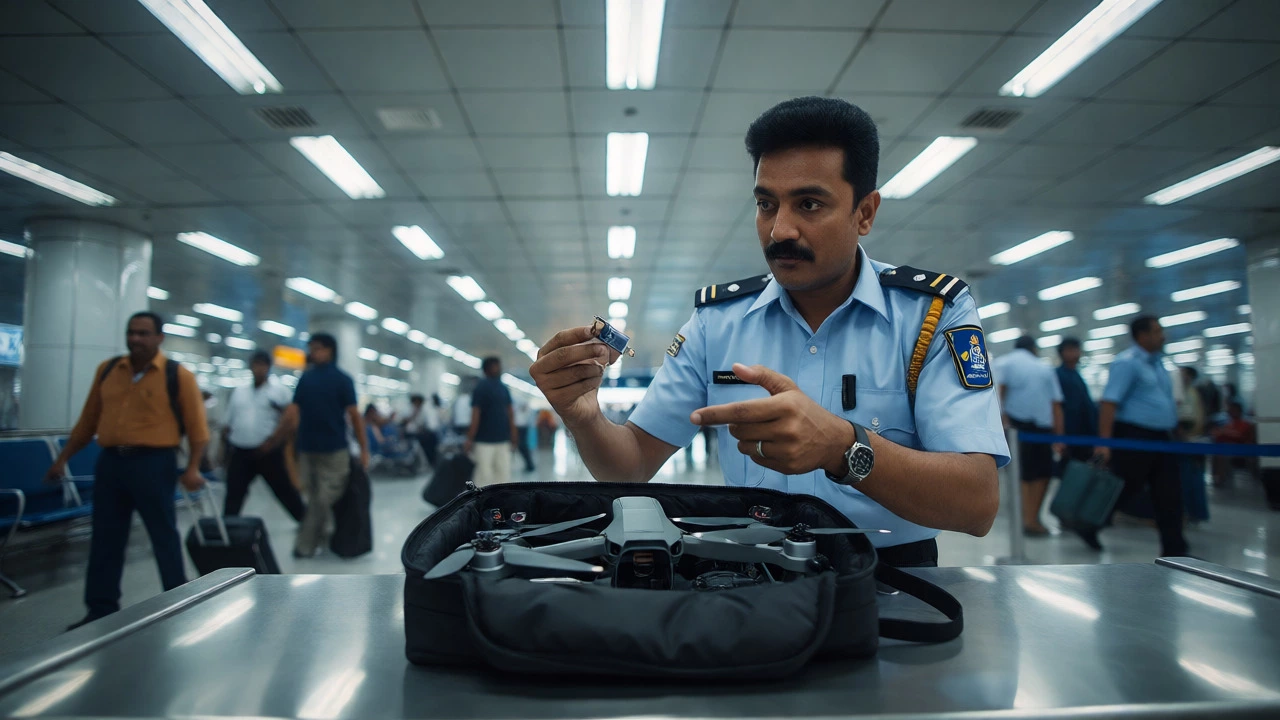
Let’s talk money. Drones are considered luxury electronic goods. They do not fall under the standard duty-free allowance that covers personal items like clothes or used electronics. When you land in Delhi, Mumbai, or Bangalore, you will likely pass through customs. Here’s what usually happens:
- New vs. Used: If your drone is brand new in the box, customs officers often view it as an import for sale or a gift, triggering full customs duty. If it looks used, they might classify it as personal baggage, which *might* waive some fees, but this is inconsistent.
- The Duty Rate: Expect to pay between 18% and 42% in customs duty plus cess, depending on the specific classification. For a $2,000 drone, that’s potentially $400-$800 extra.
- Carry-On Strategy: Always carry the original invoice. If you don’t have it, customs may estimate the value based on current market rates, which is rarely in your favor.
Pro tip: Remove the drone from its retail packaging. Put it in a padded case with accessories scattered around. Make it look like well-loved gear, not inventory. Some travelers report success by declaring the item honestly and paying the duty upfront rather than risking a search later. Others gamble on the green channel. Be prepared to pay.
Flying Rules: Where Can You Actually Fly?
Once you’re past customs and registered, you still can’t just launch anywhere. India’s airspace is complex. The No-Fly Zones are extensive, especially near airports, military bases, and government buildings.
You need to download the Digital Sky App. It provides real-time maps of permitted zones. Generally, you can fly in open fields and tourist spots outside city limits, provided you stay below 120 meters (400 feet) AGL (Above Ground Level).
| Parameter | Rule | Penalty Risk |
|---|---|---|
| Max Altitude | 120 meters (400 ft) | High |
| Visual Line of Sight | Mandatory | Medium |
| Night Flying | Permitted with lights | Low |
| Airport Vicinity | No-fly within 5km (strict) | Very High |
| Privacy | No filming private property without consent | Medium |
Also, keep your eyes peeled for local police. In popular tourist hubs like Goa or Jaipur, local authorities sometimes enforce additional restrictions due to crowd safety. If a police officer asks you to land, do it politely. Arguing about federal aviation law with a local constable rarely ends well.
Insurance: Don’t Skip This Step
Crashing a drone in a crowded market in Old Delhi isn’t just embarrassing; it’s expensive. If your drone hits a person or a heritage structure, liability costs can skyrocket. Standard US homeowner’s insurance rarely covers international drone operations.
You should buy third-party liability insurance specifically for India. Several Indian insurers offer short-term policies for tourists. It’s cheap-often less than $20 for a week-and gives you peace of mind. Without it, one bad landing could cost you thousands in damages.
Practical Tips for Travelers
After helping dozens of photographers navigate this process, here are a few things that save headaches:
- Batteries: Lithium-polymer batteries must go in your carry-on luggage. Never check them in. Also, ensure each battery is under 100Wh (most DJI consumer drones are fine). Tape the terminals to prevent short circuits.
- Remote ID: Ensure your firmware is up to date. Some newer models broadcast Remote ID automatically. Older models might need a dongle or app-based broadcasting to comply with visibility rules.
- Spare Parts: Bring extra propellers. Finding specific DJI parts in rural India can be tough. Urban centers like Mumbai and Delhi have authorized service centers, but wait times can be long.
- Language Barrier: While English is widely spoken, local regulations vary. Having a screenshot of your Digital Sky registration on your phone helps if you’re stopped.
Remember, the goal is to enjoy the stunning aerial views India offers-from the Himalayas to the coastal cliffs. By handling the paperwork beforehand, you spend less time arguing with officials and more time capturing content.
Do I need to pay customs duty if my DJI drone is used?
It depends on the customs officer's discretion. Technically, all imported goods are subject to duty. However, if the drone clearly shows signs of wear and tear and you declare it as personal baggage, you might avoid the full charge. New-in-box drones almost always incur duty. Always carry the original purchase invoice to prove value.
Can I fly my drone in Taj Mahal or other heritage sites?
Generally, no. Most major heritage sites in India, including the Taj Mahal, Qutub Minar, and Red Fort, prohibit drone flights to protect structures and manage crowds. You would need special permission from the Archaeological Survey of India (ASI), which is difficult for tourists to obtain quickly. Check the site-specific rules before traveling.
Is the DJI Mini 4 Pro exempt from registration in India?
Drones under 250 grams are technically exempt from mandatory UIN registration for recreational use under the Drone Rules 2021. However, enforcement varies by state. To be safe and avoid hassle with local police, registering it on the Digital Sky platform is recommended, though not strictly legally required for pure recreation in non-sensitive zones.
What happens if I fly without registration?
Flying an unregistered drone (over 250g) is a violation of the Aircraft Act. Penalties can include fines ranging from ₹25,000 to ₹1,00,000 and potential confiscation of the drone. Local police often have the authority to impound the device until you produce valid documentation.
Can I ship my drone to India instead of carrying it?
Shipping via courier (DHL/FedEx) is possible but often more expensive due to high customs duties and processing fees. Additionally, lithium batteries are classified as dangerous goods, requiring special handling and documentation. Carrying it personally is usually cheaper and faster, despite the risk of customs checks.