Can Foreigners Bring Drones to India? Complete Guide for 2026
 Jul, 3 2026
India Drone Flight Eligibility Checker
Your Details
Analysis Result
Enter your details to see if your flight is legal.
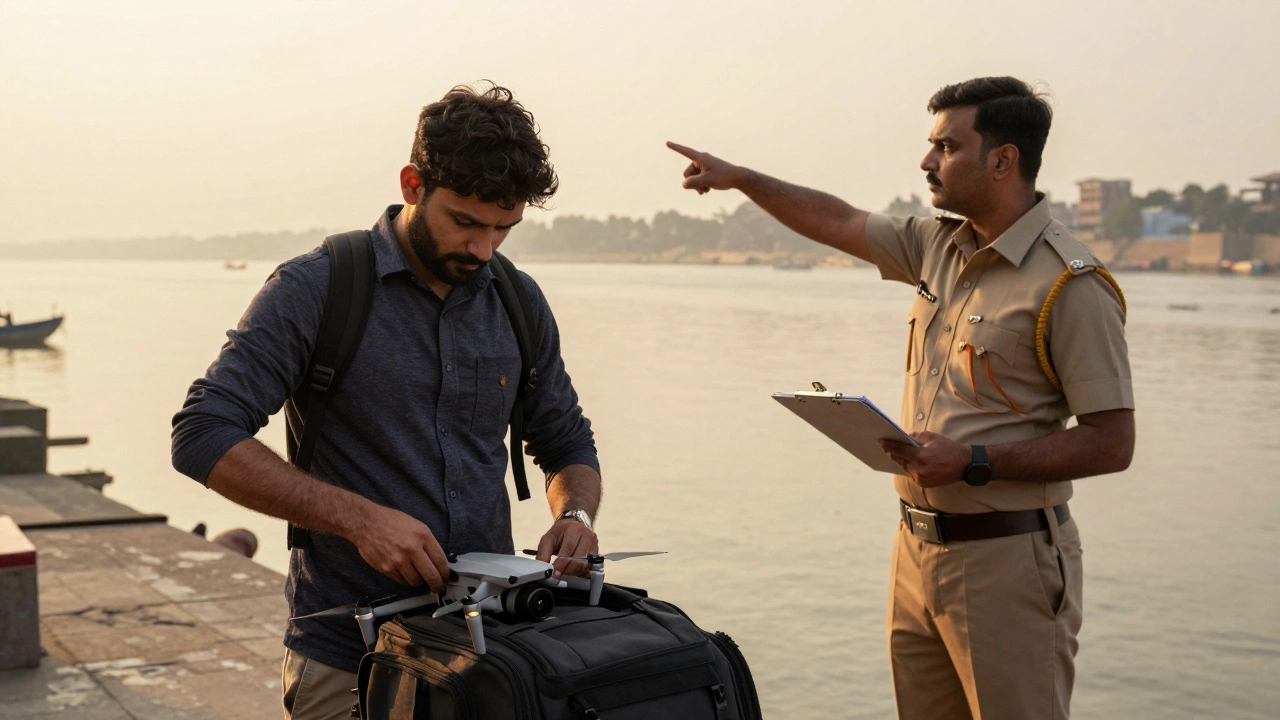
Imagine standing on the banks of the Ganges at sunrise, your camera gear packed and ready. You unzip your bag, pull out your trusty DJI Mini 4 Pro, and hit record. Suddenly, a local official approaches, asks for paperwork you didn’t know existed, and confiscates your device. This isn’t a horror story-it’s a common reality for travelers who underestimate India’s strict aviation laws.
The short answer is: yes, foreigners can bring drones to India. But the long answer involves navigating one of the most regulated airspace systems in the world. As of 2026, the government has digitized much of the process through the Digital Sky Platform, but the rules remain rigid. If you fly without proper authorization, you face fines, imprisonment, or permanent bans from entering the country again.
Why India Treats Drones Like Aircraft
To understand the rules, you need to understand the context. India shares borders with multiple countries and has faced security threats involving unauthorized aerial devices. The government views every drone as a potential security risk, regardless of its size. A tiny toy drone weighs less than a smartphone, yet it falls under the same regulatory umbrella as commercial cargo planes.
The Directorate General of Civil Aviation (DGCA) oversees all unmanned aerial vehicles (UAVs). They don’t distinguish between hobbyists and professionals unless the drone is micro-sized. Even then, permissions are required. This zero-tolerance policy means that "I didn’t know" is never an acceptable defense.
If you are visiting for tourism, business, or even filming a documentary, you must treat your drone as restricted equipment. Unlike Europe or North America, where recreational flying is largely unregulated for small drones, India requires pre-approval for almost every flight.
Step-by-Step: How to Legally Fly a Drone in India
Getting permission takes time. Do not attempt this upon arrival. Start the process at least four weeks before your trip. Here is the exact workflow:
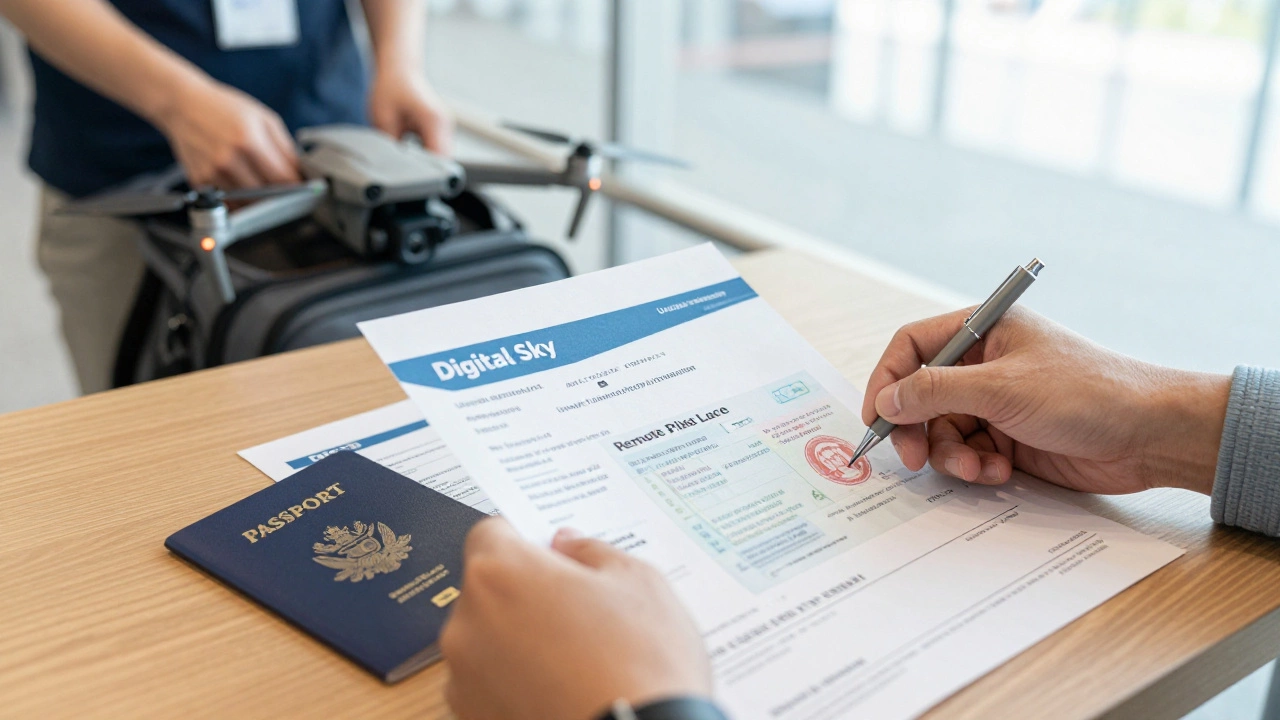
- Register on Digital Sky: Visit the official Digital Sky website. Create an account using your passport details. You will receive a Unique Identification Number (UIN) for your drone. This number must be physically attached to the drone body.
- Obtain Remote Pilot Certificate (RPL): Unless you are flying a micro-drone (under 250g), you need a Remote Pilot License. For foreigners, this often requires taking a test in India or having a recognized international license validated by the DGCA. Note: Micro-drones still require registration but may exempt you from full RPL if used strictly for personal recreation in green zones.
- Apply for Airspace Permission: Use the Digital Sky app to request flight clearance for specific coordinates and dates. You must specify the altitude, duration, and purpose of the flight. Green zones allow easier approval; red and yellow zones require military or airport authority consent.
- Carry Documentation: Print your UIN certificate, RPL, and flight approval letters. Keep them in your carry-on luggage, not checked bags. Customs officers may ask to see these documents when you enter India.
Missing any step results in immediate seizure of the drone. There are no exceptions for tourists.
Where Can You Actually Fly?
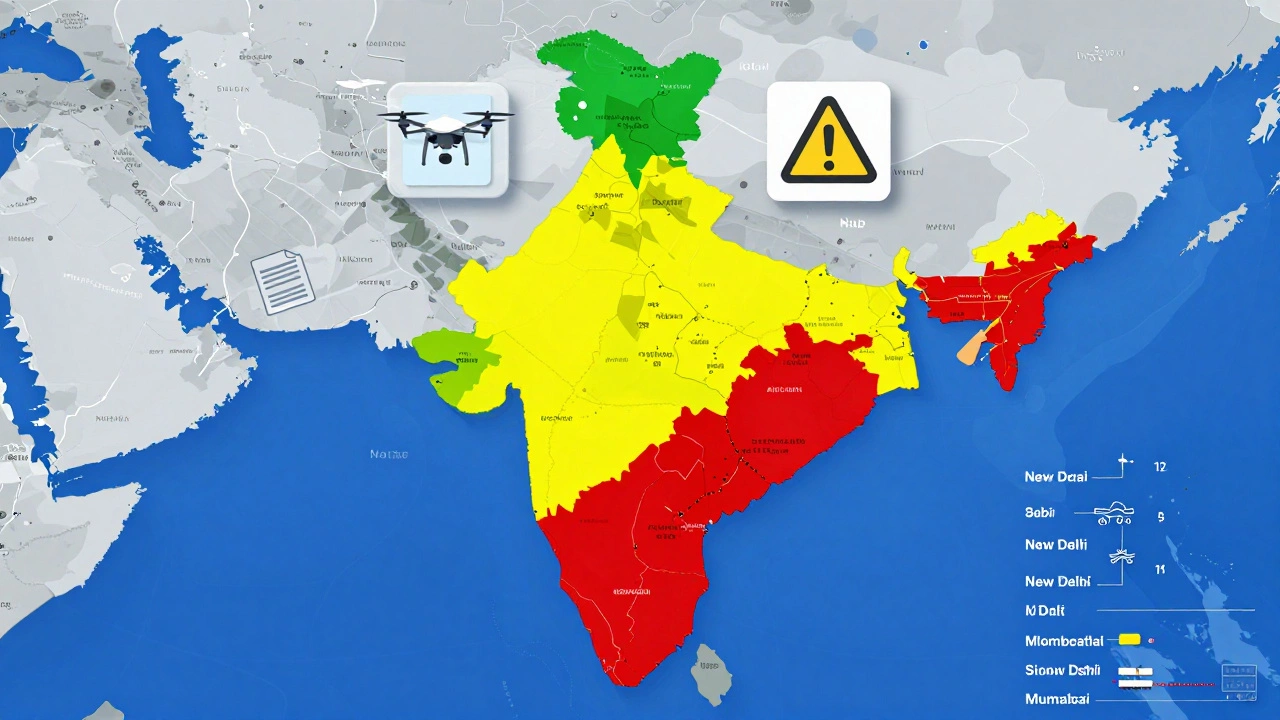
India divides its airspace into three color-coded zones. Understanding these zones is critical for planning your shots.
| Zone Color | Description | Permission Required? | Typical Locations |
|---|---|---|---|
| Green Zone | Low-risk areas far from airports and borders | Yes (via Digital Sky) | Rural villages, open fields, national parks (with forest dept approval) |
| Yellow Zone | Moderate-risk areas near airports or sensitive infrastructure | Yes (Strict scrutiny) | Suburbs, industrial areas, outskirts of major cities |
| Red Zone | No-fly zones including borders, military bases, and city centers | No (Absolutely prohibited) | New Delhi, Mumbai CBD, Taj Mahal vicinity, border regions |
Many popular tourist spots fall into Red Zones. The Taj Mahal in Agra, for example, is surrounded by a strict no-fly perimeter due to its historical significance and proximity to security installations. Similarly, flying over religious sites like Varanasi’s ghats is heavily restricted. Always check the zone map on Digital Sky before booking accommodation.
Customs and Import Rules for Foreigners
Bringing a drone into India triggers customs procedures. Here is what you need to know:
- Personal Use Declaration: Declare your drone at the arrival hall. State clearly that it is for personal use and will be exported when you leave. Do not claim it as a gift or present.
- Temporary Import Permit: In some cases, customs may issue a temporary import permit. Keep this document safe. It proves you did not sell the drone illegally in India.
- Prohibited Items: Some high-end professional drones with advanced sensors or military-grade encryption may be denied entry. Stick to consumer-grade models like DJI Mavic or Mini series to avoid complications.
- Taxes: If you fail to declare the drone or cannot prove it is leaving with you, customs may impose heavy duties or confiscate the device permanently.
I once met a photographer in Jaipur who forgot to declare his Phantom 4. He spent three days in a customs office trying to prove ownership. By the time he got it back, his visa was expiring. Don’t let this happen to you.
Common Mistakes That Get Travelers Banned
Even experienced pilots make fatal errors in India. Avoid these pitfalls:
- Flying Without Prior Approval: Thinking "it’s just a quick shot" leads to arrest. Police take drone violations seriously. Always have written permission in hand.
- Ignoring Local Laws: Some states have additional restrictions. Kerala, for instance, has stricter rules around wildlife sanctuaries. Tamil Nadu restricts flights near temples. Research state-specific guidelines.
- Flying Near People: Indian crowds are dense. Flying over festivals, markets, or religious gatherings is dangerous and illegal. Maintain a safe distance from humans and animals.
- Using Geofencing Hacks: Attempting to bypass built-in geofences with modified firmware is a criminal offense. Authorities monitor signal patterns. If they detect tampering, you will face severe penalties.
Remember: Your drone is a tool, not a right. Respect local sovereignty and safety protocols.
Alternatives If You Can’t Fly
If the bureaucracy feels overwhelming, consider these alternatives:
- Hire a Local Pilot: Many Indian photographers hold valid DGCA licenses. Hiring them ensures legal compliance and better knowledge of local spots.
- Use Ground-Based Photography: India offers stunning landscapes that don’t require aerial views. Wide-angle lenses and tripods can capture epic scenes from the ground.
- Stock Footage: Purchase licensed drone footage from platforms like Shutterstock or Getty Images. This saves time and avoids legal risks entirely.
These options often yield higher-quality results because local pilots know the best lighting conditions and hidden locations.
What Happens If You Get Caught?
Violating drone laws in India carries serious consequences:
- Confiscation: Your drone will be seized immediately. Recovery is difficult and expensive.
- Fines: Penalties range from ₹50,000 to ₹5,00,000 ($600-$6,000 USD) depending on the severity of the violation.
- Imprisonment: Repeated offenses or flights near sensitive areas can lead to jail time under the Aircraft Act.
- Visa Revocation: Immigration authorities may cancel your visa and deport you. Future entry into India could be denied.
Do not gamble with your freedom or travel plans. Compliance is non-negotiable.
Final Checklist Before You Fly
Before lifting off, verify these items:
- ✓ Drone registered on Digital Sky with UIN visible
- ✓ Remote Pilot License (if applicable) carried in physical form
- ✓ Flight approval letter for specific date/location printed
- ✓ Insurance coverage for third-party liability
- ✓ Battery life sufficient for return journey
- ✓ Weather conditions checked (monsoon rains disrupt flights)
India rewards patience and preparation. Follow the rules, respect the culture, and you’ll capture breathtaking images without incident.
Can I fly a drone in India without a license?
Only if you are flying a micro-drone (under 250g) in a designated green zone for personal recreation. All other drones require a Remote Pilot License issued by the DGCA. Even micro-drones must be registered on the Digital Sky platform.
How long does it take to get drone permission in India?
Processing times vary. Green zone approvals typically take 3-7 working days. Yellow and red zone requests can take 15-30 days or more, especially if military or airport authorities need to review them. Apply early to avoid delays.
Is it legal to buy a drone in India as a tourist?
Technically yes, but it is complicated. You must register the drone locally, obtain necessary licenses, and comply with import taxes. Most tourists find it easier to bring their own registered drone rather than purchasing one temporarily.
Which cities in India are completely no-fly zones?
Central New Delhi, parts of Mumbai, Kolkata, and Chennai city centers are largely red zones. Additionally, all areas within 8 km of airports and 10 km of international borders are strictly prohibited for civilian drone operations.
Do I need insurance for my drone in India?
While not always mandatory for micro-drones, third-party liability insurance is highly recommended. It covers damages to property or injury to persons caused by your drone. Many rental companies and local pilots require proof of insurance before allowing joint operations.