Do I Need an FAA License to Fly a DJI Drone in India? The Truth About DGCA Rules
 Jun, 20 2026
India Drone Compliance Checker
Determine your registration and licensing requirements based on DGCA rules.
Your Compliance Checklist:
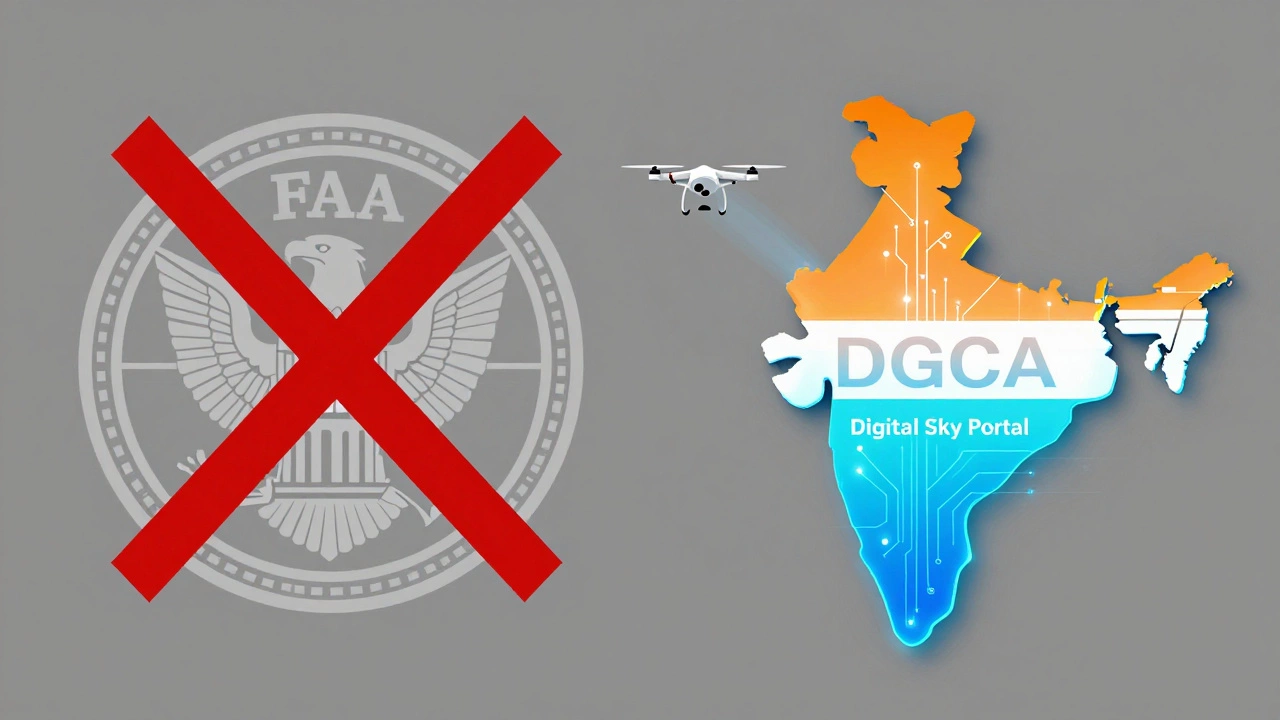
Here is the short answer that saves you from legal trouble: No. You do not need an FAA license to fly a DJI drone in India. The Federal Aviation Administration (FAA) only regulates airspace in the United States. If you are flying your quadcopter over Mumbai, Delhi, or anywhere else in India, the FAA has zero jurisdiction.
However, just because you don't need an American license doesn't mean you can fly freely without paperwork. In fact, the rules in India have become significantly stricter since the implementation of the Digital Sky Portal and the new Drone Rules of 2021. Flying without the correct Indian certification can lead to heavy fines, confiscation of your expensive DJI gear, or even imprisonment.
If you are planning to shoot aerial footage in India, you need to understand who actually controls the sky above you and what specific documents you must carry before you take off. Let's break down exactly how the system works for hobbyists versus professionals.
The Authority That Matters: DGCA vs. FAA
To avoid confusion, let's clear up the hierarchy. The DGCA (Directorate General of Civil Aviation) is the regulatory body for civil aviation in India. They are the ones who write the laws, issue licenses, and enforce penalties for drone operations within Indian borders.
The FAA (Federal Aviation Administration) is strictly for the US. Many pilots get confused because they watch YouTube tutorials from American creators who talk about "Part 107" certifications. Part 107 is a US-specific regulation. It holds no value in New Delhi. When you land in India with your DJI Mavic or Air series, you are subject to the Aircraft Act of 1934 and the Aircraft Rules of 1937, as amended by the recent Drone Rules.
Think of it like driving. Your US driver’s license might be valid for renting a car in London under certain international agreements, but it doesn't mean the US Department of Transportation tells you which side of the road to drive on in Mumbai. Similarly, the DGCA sets the speed limits, altitude caps, and identification requirements for drones in India.
Do You Actually Need a License?
This is where most people get tripped up. The requirement depends entirely on two factors: the weight of your drone and whether you are making money from the flight.
Category 1: Micro Drones (Under 250 grams) If you own a lightweight drone like the DJI Mini 4 Pro (a sub-250g consumer drone) or the Mini SE, the rules are relaxed. For recreational use, you generally do not need a pilot license. However, you still cannot fly near airports, military zones, or crowded public gatherings. You must also register the drone if you intend to fly it outside of specific no-registration zones defined by local authorities, though enforcement varies by state.
Category 2: Small and Medium Drones (250g to 25kg) This covers the bulk of popular models like the DJI Air 3, Mavic 3 Classic, and Mavic 3 Pro. If you are flying these for fun (non-commercial), you typically do not need a full commercial pilot license, but you must register the drone on the Digital Sky portal and obtain a Unique Identification Number (UIN). You also need to ensure you have insurance coverage.
Category 3: Commercial Operations If you are getting paid-whether for real estate photography, wedding videography, or agricultural surveying-you absolutely need a license. This is called the Remote Pilot Certificate (the official license for commercial drone operators in India). To get this, you must complete training at a DGCA-approved academy and pass a written exam. Without this certificate, operating a drone for profit is illegal.
The Digital Sky Portal: Your First Step
Gone are the days when you could just buy a drone and fly it. Every drone operator in India must interact with the Digital Sky Portal (the government platform for drone registration and flight authorization). This is the central database where all drone activities are tracked.
Here is the process you need to follow:
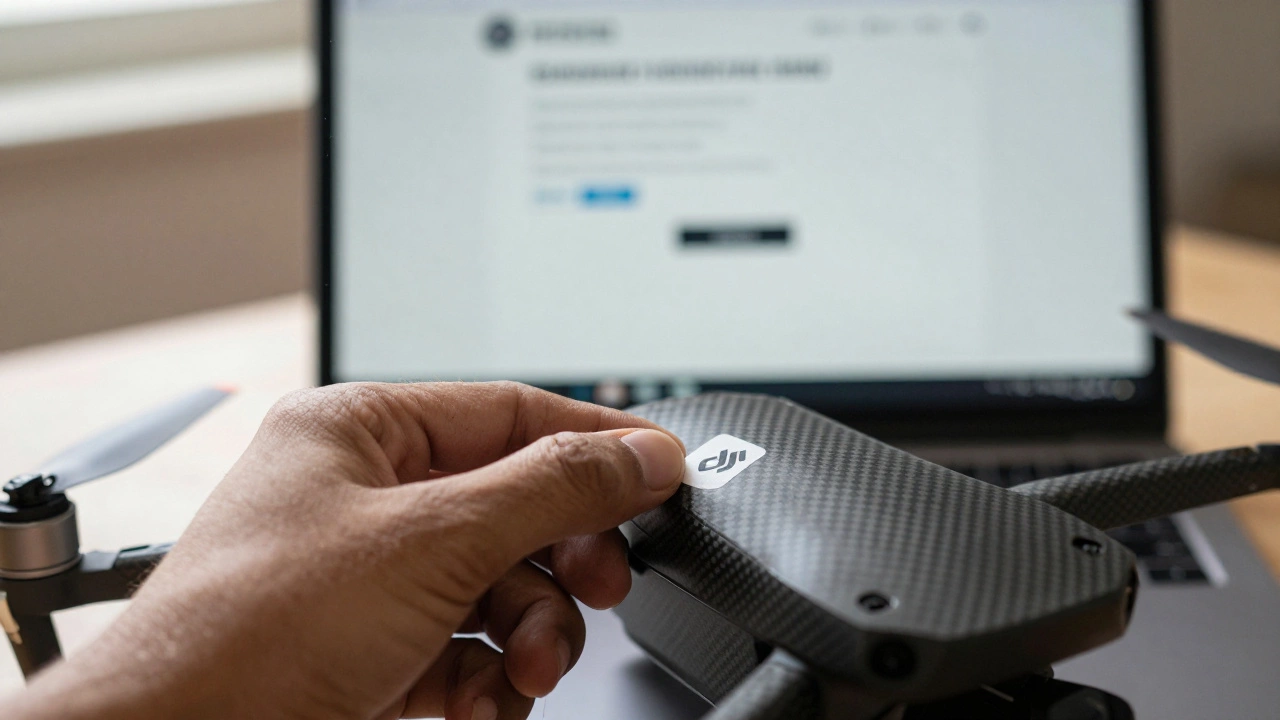
- Register Your Drone: Create an account on the Digital Sky website. Upload your proof of purchase and identity documents. You will receive a UIN (Unique Identification Number). You must affix this number to your drone physically.
- Get a Remote ID: Once registered, your drone gets a digital ID linked to your account.
- Apply for Flight Authorization: Before every commercial flight, or for certain recreational flights in restricted areas, you must apply for permission through the portal. This application is reviewed by the local air traffic control or police department depending on the zone.
Flying without registering your drone on Digital Sky is one of the most common violations cited by authorities during raids. Even if your drone is small, having that UIN sticker proves you are a responsible operator.
Understanding Geofencing and No-Fly Zones
Your DJI drone likely comes with built-in geofencing software. This is a safety feature that prevents you from taking off near airports or restricted military bases. In India, these restrictions are taken very seriously.
You must avoid flying within:
- Airport Vicinities: Typically a 7km to 9km radius around any airport. This includes major hubs like Indira Gandhi International Airport (Delhi) and Chhatrapati Shivaji Maharaj International Airport (Mumbai).
- Military Installations: Areas surrounding army camps, navy bases, and air force stations are strictly prohibited.
- Sensitive Government Buildings: The Red Fort, Parliament House, Rashtrapati Bhavan, and other high-security government complexes have permanent no-fly zones.
- Crowded Public Events: Flying over festivals, political rallies, or large concerts is banned due to safety risks.
Even if your drone's app says "Takeoff Denied," do not try to bypass this with third-party firmware hacks. Doing so in India can result in immediate seizure of the device and legal action under the Unmanned Aircraft System Rules.
Commercial Licensing: The Remote Pilot Certificate
If you want to turn your drone hobby into a business, you need the Remote Pilot Certificate. Here is what that process looks like in 2026.
First, you must enroll in a DGCA-approved training institute. There are dozens of these across India, from Bangalore to Kolkata. The course usually lasts between 30 to 60 hours and covers theory (air law, meteorology, navigation) and practical flight tests.
After completing the course, you take an exam conducted by the DGCA. Once you pass, you receive your certificate. This license is mandatory if you are:
- Filming weddings or events for payment.
- Conducting land surveys for construction companies.
- Monitoring crops for agricultural clients.
- Creating promotional content for brands.
Without this certificate, you are essentially working illegally. Clients who hire unlicensed pilots risk their own permits being revoked, so professional photographers often refuse to work with unlicensed drone operators.
| Drone Category | Weight Limit | Recreational Use | Commercial Use | Registration Required? |
|---|---|---|---|---|
| Micro | < 250g | No License Needed | License Needed | Yes (UIN) |
| Small | 250g - 2kg | No License Needed | License Needed | Yes (UIN) |
| Medium | 2kg - 25kg | No License Needed | License Needed | Yes (UIN) |
Penalties for Non-Compliance
Why does this matter? Because the consequences are severe. Under the current regulations, flying a drone without proper authorization can lead to:
- Confiscation: Police or aviation authorities can seize your drone immediately.
- Fines: Monetary penalties ranging from ₹1 lakh to ₹50 lakhs depending on the severity of the violation.
- Imprisonment: In cases involving national security breaches or endangering public safety, jail terms of up to 5 years are possible.
I have seen fellow photographers lose their entire DJI setup because they flew a few hundred meters too close to a temple complex during a festival. It is not worth the risk. Always check the Digital Sky portal for real-time restricted zones before you head out.
Insurance: The Often Forgotten Requirement
Another critical piece of the puzzle is insurance. The Drone Rules mandate that all unmanned aircraft systems must have third-party liability insurance. This covers damage your drone might cause to people or property on the ground.
Many insurers in India now offer specific drone packages. Make sure your policy matches the weight category of your drone. Flying without insurance is another easy way to get flagged during a routine check. Keep a digital copy of your insurance certificate on your phone along with your UIN and Remote Pilot Certificate.
Practical Tips for Flying in India
India presents unique challenges for drone pilots beyond just the paperwork. Dust, heat, and unpredictable crowds require extra caution.
Heat Management: Indian summers can push temperatures above 40°C (104°F). DJI drones have thermal protection that will force a landing if the battery gets too hot. Plan your flights for early morning or late evening. Avoid midday flights in April and May.
Dust and Sand: If you are traveling to Rajasthan or coastal areas, dust is your enemy. Clean your gimbal and camera lens frequently. Carry a microfiber cloth and compressed air. A scratched lens can ruin thousands of rupees worth of footage.
Local Permissions: Even if you have national clearance, local police or municipal corporations may ask for additional permissions for filming in public spaces. Always carry a printed letter from your client or production house explaining the purpose of the shoot. Being polite and prepared goes a long way.
Summary of Steps to Fly Legally
So, do you need an FAA license? No. But you do need to follow this checklist to stay legal in India:
- Buy a DJI drone from an authorized dealer to ensure warranty support.
- Register the drone on the Digital Sky Portal to get your UIN.
- Stick the UIN label on the drone body.
- If flying commercially, complete DGCA-approved training and get your Remote Pilot Certificate.
- Purchase third-party liability insurance.
- Check for no-fly zones on the Digital Sky app before every flight.
- Carry your ID, UIN, and Insurance documents while flying.
By following these steps, you protect yourself, your equipment, and your career. The skies in India are beautiful, but they are regulated. Respect the rules, and you’ll enjoy many safe flights.
Can I fly my DJI Mini 4 Pro in India without any license?
For recreational purposes, yes, you can fly a sub-250g drone like the DJI Mini 4 Pro without a pilot license. However, you must still register the drone on the Digital Sky Portal to obtain a Unique Identification Number (UIN) and display it on the device. You must also adhere to no-fly zones and altitude restrictions.
Is an FAA Part 107 license valid in India?
No, an FAA Part 107 license is only valid in the United States. It has no legal standing in India. To fly commercially in India, you must obtain a Remote Pilot Certificate from the Directorate General of Civil Aviation (DGCA) after completing approved training.
How much does it cost to get a drone license in India?
The cost varies depending on the training institute and the category of drone. Generally, training for small and medium drones ranges from ₹20,000 to ₹50,000. This includes classroom instruction, simulator time, and practical flight training. Additional fees may apply for the exam and certificate issuance.
What happens if I fly a drone without registering it on Digital Sky?
Flying without registration is a violation of the Drone Rules. Authorities can confiscate your drone, impose heavy fines, and potentially file criminal charges. Registration is mandatory for all drones except those used purely for R&D in controlled environments.
Do I need insurance for my personal drone in India?
Yes, third-party liability insurance is mandatory for all unmanned aircraft systems in India. This insurance covers damages caused to third parties or property. While comprehensive hull insurance (for your own drone) is optional, liability insurance is a legal requirement.