How Big Should a TV Studio Be? Size Guide for India
 May, 12 2026
TV Studio Space & Cost Estimator
Key Spatial Needs
- Select options to see requirements.
Picture this: you have the perfect camera gear, crisp lighting, and a talented presenter. But when you step into your new TV studio, there’s nowhere to move. The lights clash with the backdrop, the sound echoes off the walls, and your guest looks cramped on screen. Sound familiar?
In India, where real estate costs in cities like Mumbai, Delhi, and Bangalore can skyrocket, getting the size of your broadcast studio a controlled environment designed for video recording with specific acoustic and lighting requirements right is critical. Too small, and your production quality suffers. Too big, and you waste money on rent, power, and maintenance.
The truth is, there is no single "correct" size. It depends entirely on what you are producing. A news anchor desk needs a fraction of the space required for a multi-camera talk show with live guests. Let’s break down exactly how much space you actually need based on your production goals.
Determining Your Studio’s Core Purpose
Before measuring square footage, you must define your content format. This decision drives every other requirement, from ceiling height to equipment placement.
- Talk Shows & Interviews: These require space for at least two chairs, a small table, and room for cameras to capture both wide shots and close-ups without crossing each other’s lines of sight.
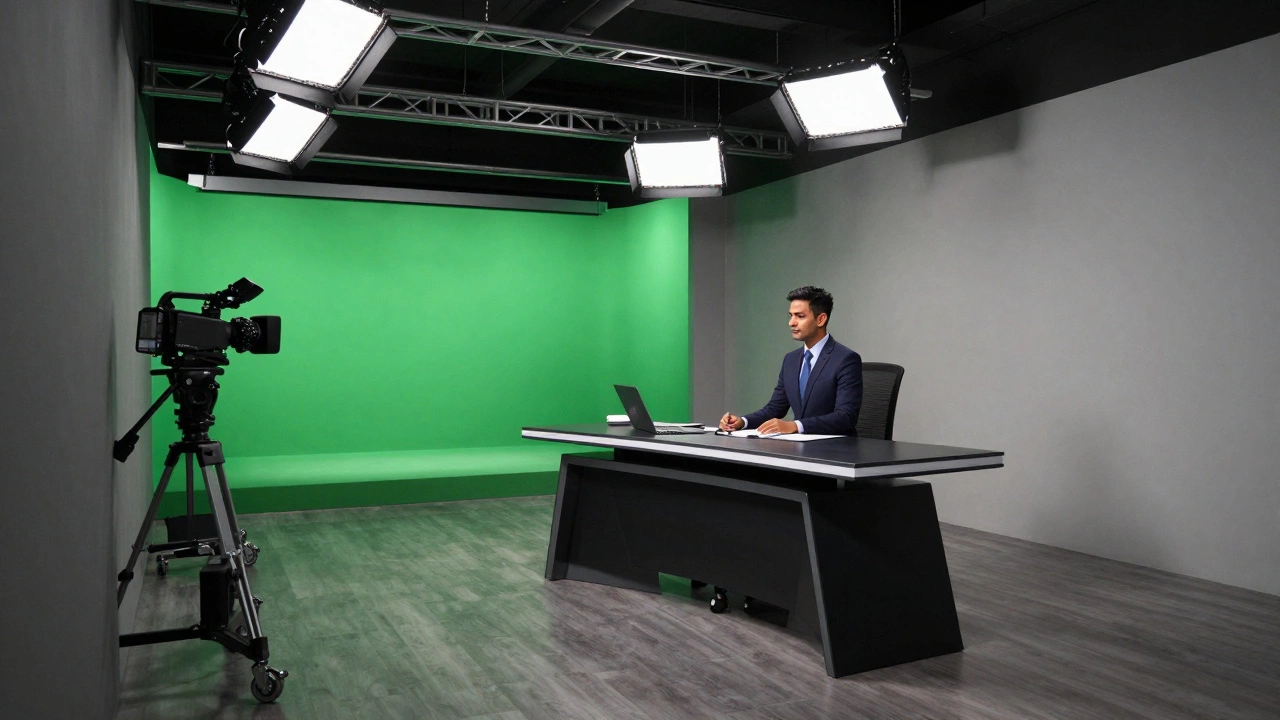
- News Anchoring: This is the most compact format. You primarily need space for one or two desks, a green screen or digital backdrop, and overhead lighting rigs.
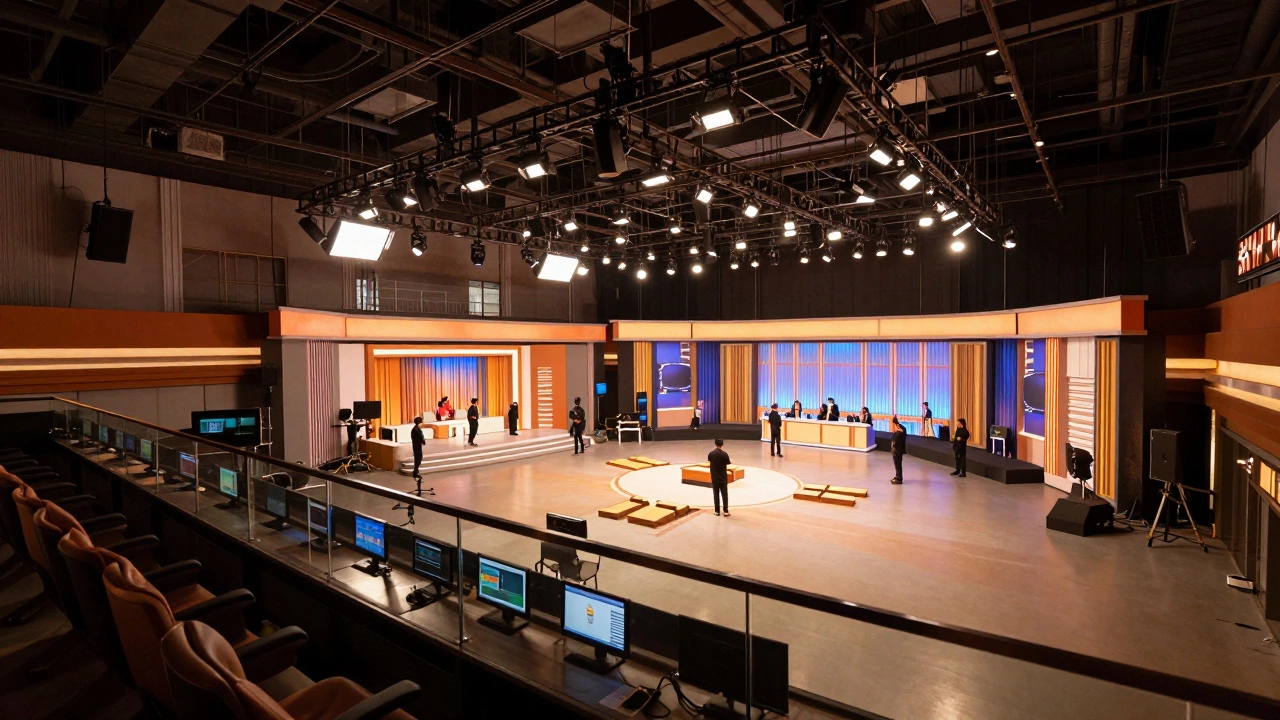
- Variety & Game Shows: These demand significant floor space for audience seating, stage props, and multiple camera positions to capture dynamic movement.
- Educational & Tutorial Content: Often requires a clean, minimal set with space for demonstration tables or whiteboards, plus room for overhead camera angles.
If you are planning a multi-camera setup a filming technique using two or more cameras simultaneously to capture different angles, you will need significantly more floor space than a single-camera operation. Each camera needs its own dedicated zone to avoid obstructing others.
Minimum Space Requirements by Format
Here is a practical breakdown of the minimum floor area you should aim for, depending on your production type. These figures include space for equipment, crew movement, and safety clearances.
| Production Type | Minimum Floor Area (sq ft) | Key Spatial Needs |
|---|---|---|
| News Anchor / Solo Presenter | 150 - 250 sq ft | Desk space, backdrop distance, overhead lighting clearance |
| Interview / Talk Show (2 Guests) | 300 - 500 sq ft | Seating arrangement, camera separation, monitor placement |
| Multi-Camera Drama / Variety | 800 - 1,500+ sq ft | Stage area, audience seating, prop storage, complex lighting grids |
| Green Screen / Virtual Production | 400 - 600 sq ft | Deep depth for chroma key, even lighting coverage, tracking systems |
For example, if you are setting up a news desk, you might think 100 square feet is enough. However, that leaves no room for the camera operator to adjust focus, for lighting technicians to tweak spots, or for cables to be managed safely. Always add a 20-30% buffer to your calculated minimums.
Ceiling Height: The Overlooked Dimension
Floor area gets all the attention, but ceiling height is equally important in a professional television studio a facility equipped with specialized audio-visual technology for broadcasting. Low ceilings force you to place lights too close to talent, creating harsh shadows and heat issues.
- Standard Minimum: 12 feet (3.6 meters). This allows for basic lighting trusses and some cable management above the set.
- Ideal Professional Height: 16-20 feet (4.8-6 meters). This provides ample space for overhead cameras, complex lighting grids, and acoustic treatment without making the room feel cavernous.
- High-End Broadcast: 24+ feet (7.2+ meters). Required for large-scale productions with hanging sets, extensive rigging, and advanced virtual reality tracking systems.
In many older Indian commercial buildings, ceiling heights may only be 9-10 feet. While you can still produce content here, you will be limited in your lighting options and may struggle with heat buildup from LED panels and HMI lights.
Acoustics and Soundproofing Considerations
A beautiful image means nothing if the audio is poor. In India, external noise pollution-traffic, construction, street vendors-is a major challenge for studios located in urban centers. Your studio size must account for soundproofing materials specialized insulation and damping products used to block external noise.
You cannot simply build a thin-walled box and expect it to be silent. Effective soundproofing requires:
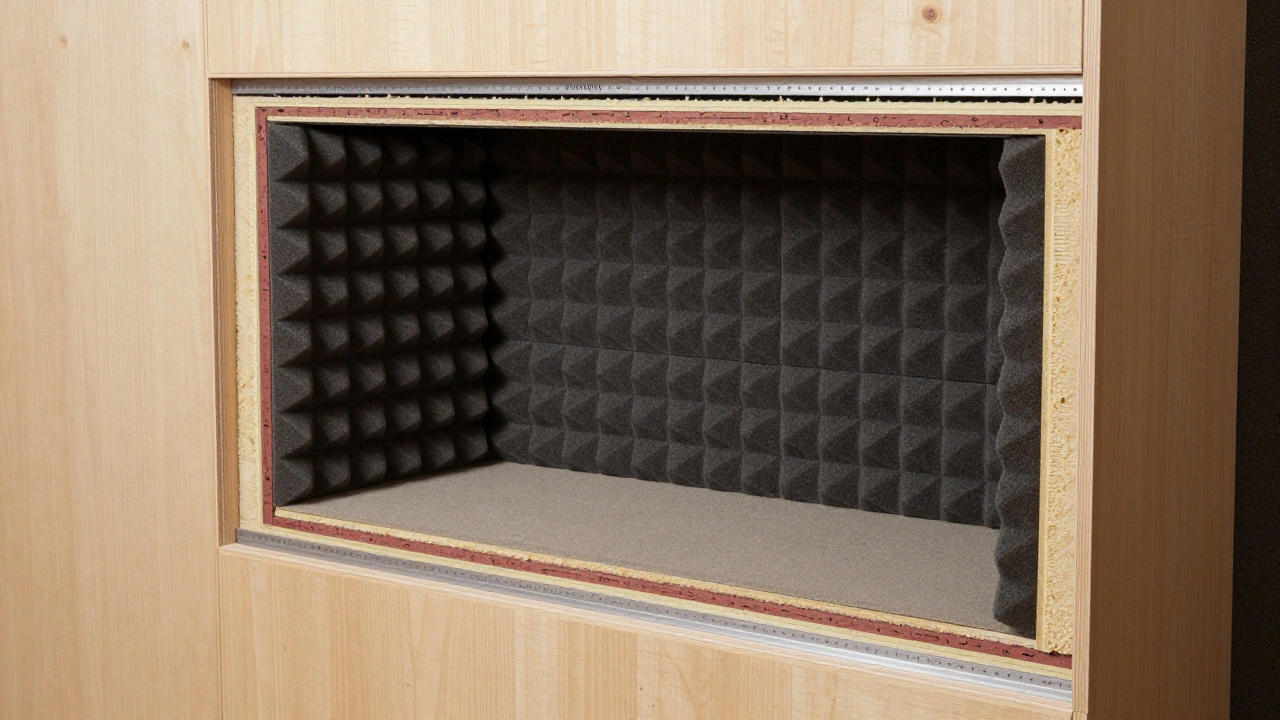
- Mass: Thick drywall or concrete partitions to block low-frequency sounds like traffic rumble.
- Damping: Resilient channels or decoupling clips to prevent vibrations from traveling through walls.
- Absorption: Acoustic foam or fabric-wrapped panels inside the studio to reduce echo and reverberation.
These layers take up physical space. If you plan to build a "room within a room" for optimal acoustics, you need to factor in an additional 6-12 inches of wall thickness on all sides. This reduces your usable floor area but drastically improves audio quality.
Equipment and Crew Workflow Space
Your studio isn’t just for talent; it’s a workplace for a crew. Even in a small setup, you need designated zones for:
- Control Room: Where directors, camera operators, and audio engineers sit. This should be separate from the main studio floor to minimize distractions and noise.
- Cable Management: Cables run across floors and ceilings. They need gaffer tape protection and routing paths that don’t trip people or interfere with camera movements.
- Set Dressing & Storage: Props, backdrops, and spare equipment need nearby storage. Moving heavy items in and out during a shoot wastes time and disrupts flow.
A common mistake in studio design the strategic planning of layout, lighting, and acoustics for video production is underestimating the control room. If you are shooting remotely or with a small team, you might skip a dedicated booth. However, even a small glass-walled enclosure helps isolate the director’s voice from the studio microphones.
Budget vs. Space: The Indian Context
Rent prices vary wildly across India. In Mumbai’s Bandra or Andheri areas, commercial space can cost ₹1,500-₹3,000 per square foot annually. In contrast, Tier-2 cities like Pune, Hyderabad, or Chandigarh offer similar spaces at 40-60% lower rates.
If budget is tight, consider these strategies:
- Modular Sets: Use lightweight, movable backdrops instead of permanent builds. This allows you to change the look of a small space quickly.
- Vertical Expansion: If floor space is expensive, go up. Use higher ceilings for lighting and rigging, which creates a sense of openness without increasing rental footprint.
- Shared Facilities: Partner with other producers to share studio time. Many successful indie creators in India operate on a shared-model basis, splitting costs and maximizing utilization.
Remember, a smaller, well-designed studio often outperforms a large, poorly planned one. Focus on efficient workflow and technical quality over sheer square footage.
Future-Proofing Your Space
Technology evolves rapidly. Today’s standard definition setup may become tomorrow’s high-definition or 4K virtual production hub. When choosing your studio size, leave room for growth.
Consider adding extra electrical conduits, reinforced flooring for heavy equipment, and flexible wall structures that can be reconfigured. Virtual production trends, driven by technologies like LED walls and Unreal Engine, are changing how studios are built. An LED volume requires precise spacing between the screen and talent to prevent moiré patterns and ensure accurate tracking.
If you anticipate adopting virtual production a filmmaking technique that uses real-time computer graphics to create immersive environments in the future, plan for a deeper stage. You’ll need several meters of clear space behind your LED wall for technicians and servers.
What is the smallest possible size for a functional TV studio?
The absolute minimum for a solo presenter or news anchor is around 150 square feet. This allows for a desk, a chair, and basic lighting without overcrowding. However, this assumes you have a separate control area and do not need space for multiple cameras or guests.
Do I need a separate control room?
Yes, ideally. A control room isolates the director and technical staff from the studio floor, preventing their voices and keyboard clicks from being picked up by sensitive microphones. Even a small, glass-walled booth of 50-70 square feet makes a significant difference in audio quality.
How does ceiling height affect my studio?
Ceiling height determines your lighting flexibility and heat management. A minimum of 12 feet is recommended to hang light trusses safely away from talent. Higher ceilings (16+ feet) allow for better air circulation, reducing heat buildup from powerful LED panels and HMIs.
Can I convert a regular office space into a TV studio?
You can, but you must address acoustics and power. Regular offices lack soundproofing, leading to echo and external noise intrusion. You’ll also need to upgrade electrical circuits to handle the load of professional lighting and camera equipment. Check local regulations regarding commercial use and fire safety.
What are the key differences between a photo studio and a TV studio?
A TV studio prioritizes continuous workflow, audio quality, and multi-camera coordination. It requires robust infrastructure for live switching, intercom systems, and consistent lighting for moving subjects. Photo studios focus more on static lighting setups and backdrop versatility, often with less emphasis on real-time audio capture.