How Long Does It Take to Build a 1000 sq ft House in India?
 Mar, 10 2026
Home Construction Timeline Calculator
Input Your Project Details
Additional Factors
Estimated Construction Timeline
Loading calculation...
Important Note: Construction timelines are typically 30% longer than estimates. Always plan a buffer for unexpected delays.
Building a 1000 sq ft house in India doesn’t follow a one-size-fits-all timeline. Some people finish in under four months. Others take over a year. Why? It’s not just about bricks and mortar-it’s about labor, materials, permits, weather, and even local bureaucracy. If you’re planning to build your first home, knowing what to expect can save you stress, money, and a lot of waiting.
What’s the average timeline?
On average, a simple 1000 sq ft house in India takes between 6 to 9 months to complete from ground-breaking to move-in. That’s if everything goes smoothly. Most homeowners underestimate how many moving parts are involved. Let’s break it down.
The process usually starts with design and approvals. In cities like Bangalore or Pune, getting building permits can take 30 to 60 days. In smaller towns or rural areas, it might be faster-sometimes just 10 to 15 days. But if your plans get rejected or need revisions, that clock resets. You’ll need structural drawings, electrical layouts, and sometimes environmental clearances if you’re near protected zones.
Phase 1: Planning and Permissions (15-60 days)
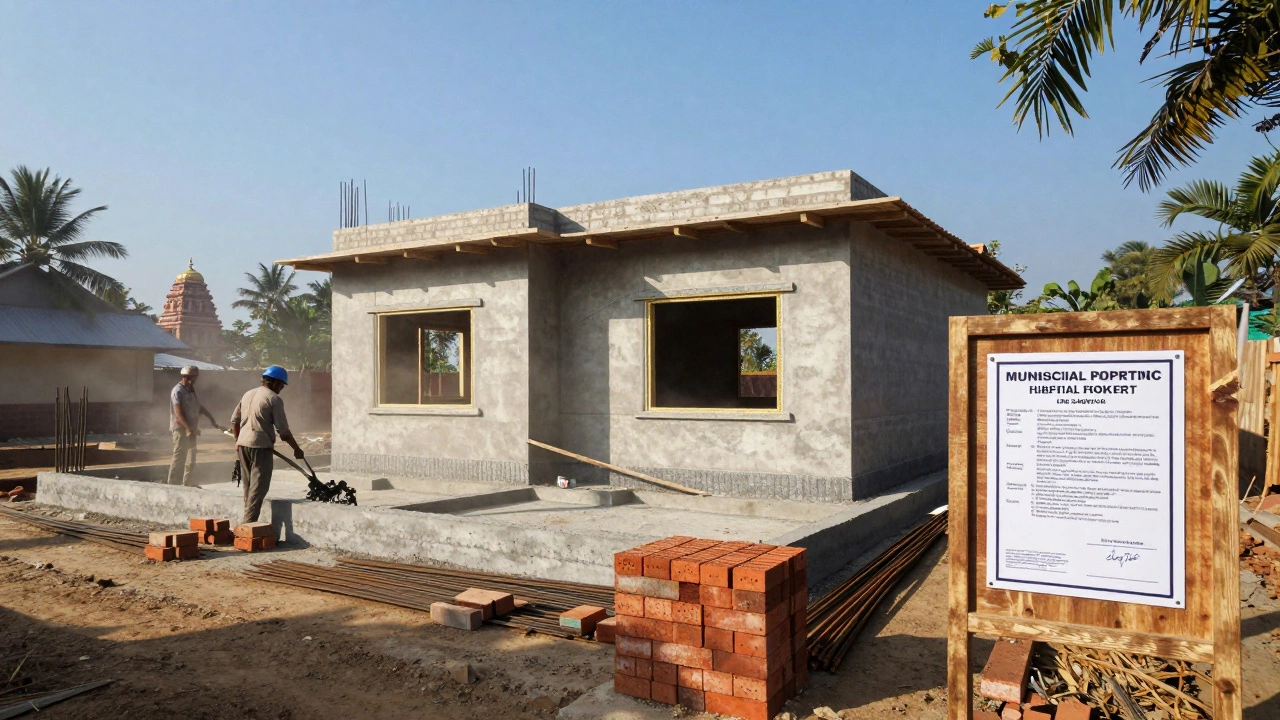
This isn’t just paperwork. It’s the foundation of your timeline. You’ll need to submit documents to the local municipal corporation or panchayat. In states like Tamil Nadu or Gujarat, online portals have cut approval times in half over the last three years. But in places like Uttar Pradesh or Bihar, delays are still common. One homeowner in Indore waited 47 days just to get a single signature from the town planning office. Don’t skip this step-pushing ahead without approval can lead to demolition orders.
Phase 2: Foundation and Framing (30-45 days)
Once permits are in hand, construction kicks off. The foundation is poured in 7-10 days, depending on soil type. In areas with clay-rich soil, like parts of Andhra Pradesh, extra time is needed for soil stabilization. Concrete curing takes another 10-14 days before walls go up. That’s when the real speed shows: skilled masons can build the entire frame-walls, columns, beams-in 15 to 20 days. But if you’re using bricks instead of prefabricated panels, expect an extra week.
Material delays are a big reason timelines stretch. Cement prices fluctuate. Steel rods sometimes sit in ports for weeks. In 2025, a shortage of high-grade cement in Maharashtra delayed 12% of new homes by 2-3 weeks. If your contractor doesn’t lock in materials early, you’re at their mercy.
Phase 3: Roofing and Enclosure (20-30 days)
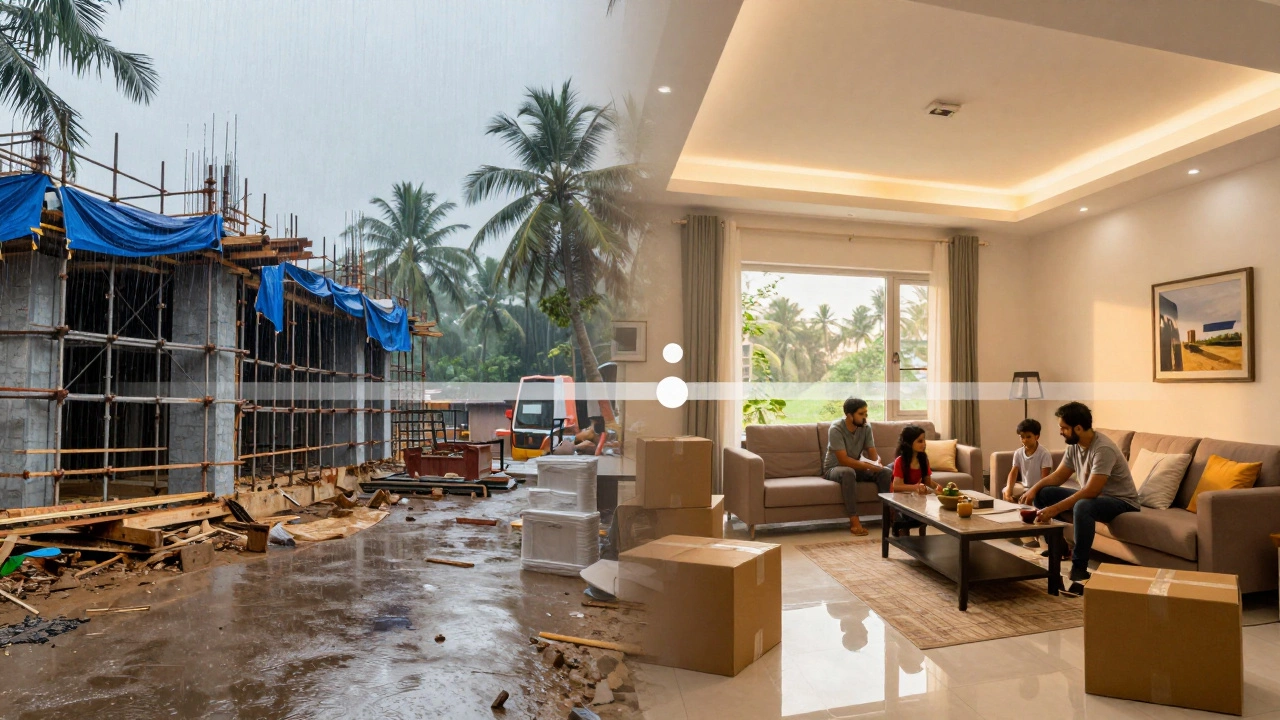
Roofing is where weather plays the biggest role. In monsoon-heavy regions like Kerala or West Bengal, you can’t lay tiles or pour slabs during heavy rain. Contractors often schedule roofing for October-March. If you start construction in May, you might wait 45 days just for dry weather. That’s not inefficiency-it’s necessity.
Windows and doors are another bottleneck. Custom sizes take 15-25 days to manufacture and deliver. Off-the-shelf options cut that to 5-7 days, but you lose design flexibility. Many homeowners don’t realize this until they’re stuck with a house that looks like every other one on the street.
Phase 4: Electrical, Plumbing, and Finishing (60-90 days)
This is the longest phase-and the most variable. Electrical wiring, plumbing lines, and sewage connections can be done in 2-3 weeks if you’re using standard layouts. But if you want smart lighting, underfloor heating, or a water purifier system, that adds 2-4 weeks. Finishing work-flooring, tiling, painting, kitchen cabinets-is where most delays happen.
Tile installation alone takes 10-14 days for 1000 sq ft, depending on the pattern. Simple grid layouts? Fast. Herringbone or mosaic? Add 5-7 days. Paint dries in 24 hours, but three coats with drying time in between? That’s 8-10 days. And if the painter gets sick, or the paint shipment is late, you’re stuck waiting.
One homeowner in Jaipur spent 38 days waiting for kitchen cabinets because the supplier mixed up the order. He had to live in a rented apartment while his own house sat half-finished. That’s not rare.
What speeds things up?
There are ways to cut time significantly:
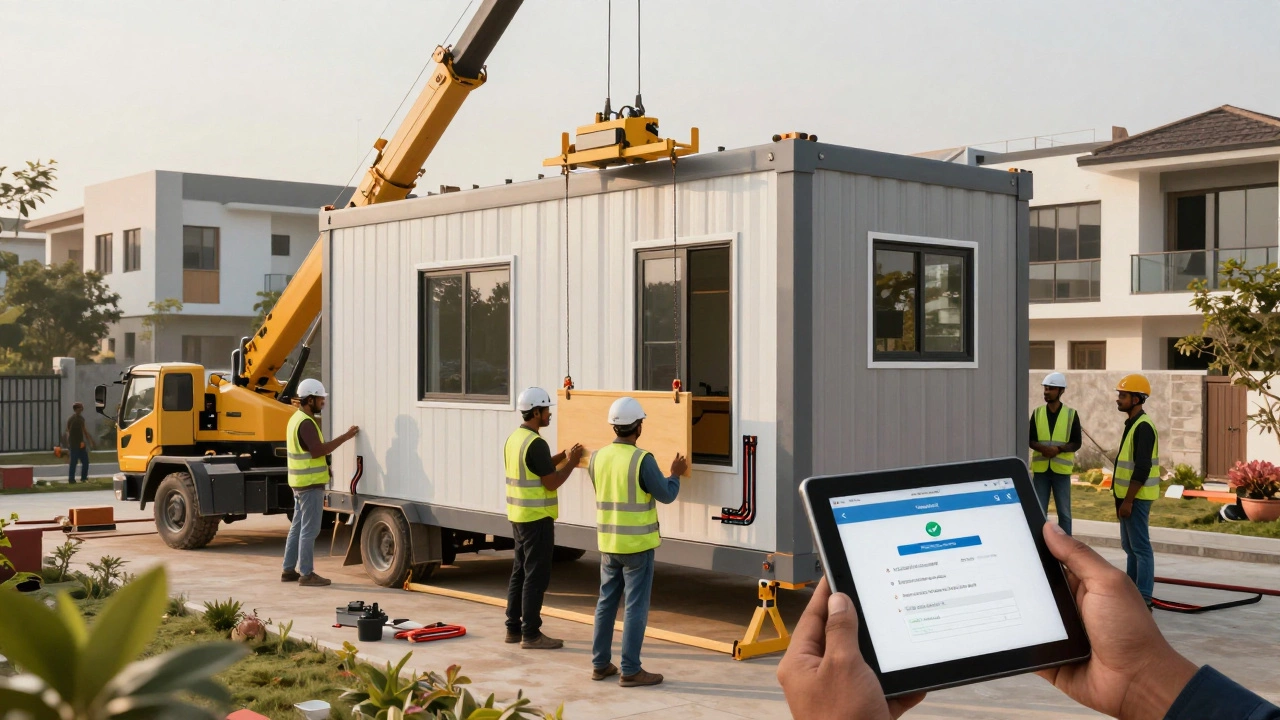
- Prefabricated panels: Companies like SmartHome India a modular housing provider that uses factory-built wall and roof panels can reduce construction time to 45-60 days by assembling the house like furniture. These panels come with insulation, wiring, and even windows pre-installed.
- Local labor pools: In states like Telangana and Karnataka, skilled masons and electricians are more abundant. Hiring a contractor with a full-time crew means less downtime.
- Online approvals: States like Maharashtra and Gujarat now offer e-permitting. You can submit plans, pay fees, and get approvals in under 10 days.
- Material pre-ordering: Lock in cement, steel, tiles, and fixtures before breaking ground. Many contractors will let you buy materials directly and deliver them to site.
What slows things down?
Here’s what most people don’t plan for:
- Monsoon season: From June to September, construction halts in most of India. Rain makes concrete unstable and wood warp. Even in dry regions, humidity slows paint drying.
- Unskilled labor: Many contractors hire casual workers who show up inconsistently. A site with 2-3 workers instead of a full crew can stretch timelines by 30-50%.
- Payment delays: If you pay in installments and miss a deadline, contractors pause work. Some even demand cash upfront-ask for receipts.
- Neighbor complaints: In gated communities or urban areas, noise complaints or violations of building codes can lead to work stoppages. One project in Hyderabad was halted for 18 days because a neighbor claimed the house blocked sunlight.
Real-world examples
Here’s what two actual projects looked like in 2025:
- Project A (Chennai): Started in January. Used prefabricated walls. Got permits in 12 days. Finished in 5 months. Cost: ₹22 lakh. Moved in by June.
- Project B (Rajkot): Started in April. Used traditional brick-and-mortar. Permits took 52 days. Monsoon hit in June. Work paused for 3 weeks. Finished in 11 months. Cost: ₹25 lakh. Moved in by March 2026.
The difference? Planning. The first homeowner locked in materials, hired a contractor with a full team, and chose a faster method. The second waited until the last minute on everything.
Can you build it faster than 6 months?
Yes-but only if you’re willing to spend more. Modular homes built by companies like BoxHome a prefabricated housing startup offering turnkey 1000 sq ft homes can be installed in 30-45 days. But you’re paying a premium: ₹28-35 lakh instead of ₹20-25 lakh. You also lose customization. If you want a custom balcony, unique window layout, or a backyard garden with specific drainage, modular isn’t your best bet.
Another option: hire a contractor who works 6 days a week. In cities like Hyderabad or Ahmedabad, some firms offer "accelerated builds"-10-hour days, no weekend breaks. That cuts 2-3 months off the timeline. But it costs 15-20% more.
What about cost vs. time?
There’s a direct trade-off. Slower builds are cheaper. Faster builds cost more. In 2025, the average cost per sq ft for a basic 1000 sq ft house in India was ₹2,000-₹2,500. That includes materials, labor, and finishes. If you want it done in 4 months, expect to pay ₹2,800-₹3,200 per sq ft. Why? Overtime pay, premium materials, expedited shipping, and contractor bonuses.
Most people think speed equals luxury. It doesn’t. It equals efficiency. You’re not upgrading your bathroom-you’re paying for someone to work faster.
Final tip: Plan for delays
Always assume your timeline will be 30% longer than your contractor promises. That’s the industry norm. Build a 30-day buffer into your schedule. If you’re moving from a rented apartment, don’t sign a lease that ends exactly when construction "should" finish. Have a backup plan. A month-long delay is normal. A three-month delay? Not unheard of.
What’s the fastest possible?
The absolute fastest a 1000 sq ft house has been built in India? 37 days. That was a prefab home by ModuHome a startup that assembles homes using shipping-container-style panels in Pune. But it had no basement, no custom finishes, and no garden. It was a basic, functional box. For most people, that’s not enough.
So, if you want a real home-with space to grow, room for your kids, a kitchen that works, and walls that last-plan for 6 to 9 months. And if you’re in a hurry? Start early. Choose wisely. And never skip the paperwork.
Can I build a 1000 sq ft house in India in under 3 months?
Only if you use a prefab or modular system and accept minimal customization. Traditional brick-and-mortar construction takes at least 6 months. Even with a full-time crew, foundation curing, drying times, and material delivery make 3 months unrealistic for a livable, finished home.
Which Indian states have the fastest home construction times?
States with better infrastructure and digital permitting systems-like Maharashtra, Gujarat, Telangana, and Karnataka-have the fastest timelines. In these regions, permits can be approved in under 15 days, and skilled labor is more readily available. Rural areas or states with weak local governance often take 2-3 times longer.
Does the type of material affect construction time?
Yes. Concrete blocks and steel frames go up faster than traditional bricks. Prefabricated panels cut construction time by half. But cheaper materials like mud bricks or bamboo take longer to cure and require more maintenance. Speed and durability often go hand-in-hand.
Do I need to hire an architect?
Not legally required for small homes under 1000 sq ft in most states. But without a proper plan, you risk permit delays, structural issues, or costly redesigns later. A good architect can reduce delays by 20-30% by ensuring plans meet local codes on the first try.
How much does it cost to build a 1000 sq ft house in India?
Basic construction costs ₹20-25 lakh. That includes standard finishes: ceramic tiles, cement plaster, aluminum windows, and a simple kitchen. Upgrades like marble flooring, smart home systems, or custom cabinetry can push the cost to ₹30-35 lakh. Always get three quotes and ask what’s included.