How Much Does It Cost to Build a Photo Studio from Scratch in India?
 Oct, 6 2026
Photo Studio Startup Cost Estimator
Configure Your Studio
Estimated Startup Budget
Select your options and click calculate to see the breakdown.
So, you want to build your own photo studio. You have the passion, maybe some experience shooting weddings or portraits, and now you’re ready to stop renting spaces or working out of your living room. But then reality hits: how much does it actually cost? If you search online, you’ll find numbers ranging from ₹50,000 to ₹10 lakhs, which is hardly helpful. The truth? It depends entirely on what kind of studio you’re building and where you are in India.
Let’s be real. A bare-bones home studio in Pune costs differently than a commercial space in Mumbai or Delhi. This guide breaks down the actual money involved-no fluff, just the hard numbers for 2026. We’re talking rent, gear, lighting, and those sneaky hidden costs that eat up your budget before you shoot a single frame.
The Big Picture: Three Tiers of Studio Costs
Before we dive into line items, understand that "studio" means different things to different people. Are you doing headshots? Product photography? Full-body fashion shoots? Your needs dictate your budget.
| Cost Category | Home/Hobbyist (₹) | Professional Freelance (₹) | Commercial/Agency (₹) |
|---|---|---|---|
| Rent & Deposit (3-6 months) | 0 - 30,000 | 1,50,000 - 4,00,000 | 5,00,000 - 15,00,000 |
| Camera Body & Lenses | 80,000 - 1,50,000 | 2,50,000 - 5,00,000 | 6,00,000 - 12,00,000 |
| Lighting Equipment | 20,000 - 50,000 | 1,00,000 - 2,50,000 | 3,00,000 - 8,00,000 |
| Backgrounds & Props | 10,000 - 30,000 | 50,000 - 1,00,000 | 1,50,000 - 4,00,000 |
| Computer & Editing Gear | 60,000 - 1,00,000 | 1,50,000 - 3,00,000 | 3,50,000 - 7,00,000 |
| Interior & Furniture | 20,000 - 50,000 | 1,00,000 - 3,00,000 | 4,00,000 - 10,00,000 |
| Total Estimated Range | ₹2L - ₹5L | ₹8L - ₹15L | ₹20L - ₹50L+ |
Notice the gap between tiers? That’s not just about better cameras. It’s about reliability, speed, and client perception. A corporate client paying ₹15,000 for a headshot expects a seamless experience, not a wobbly tripod and a messy corner of your bedroom.
Rent and Location: The Silent Budget Killer
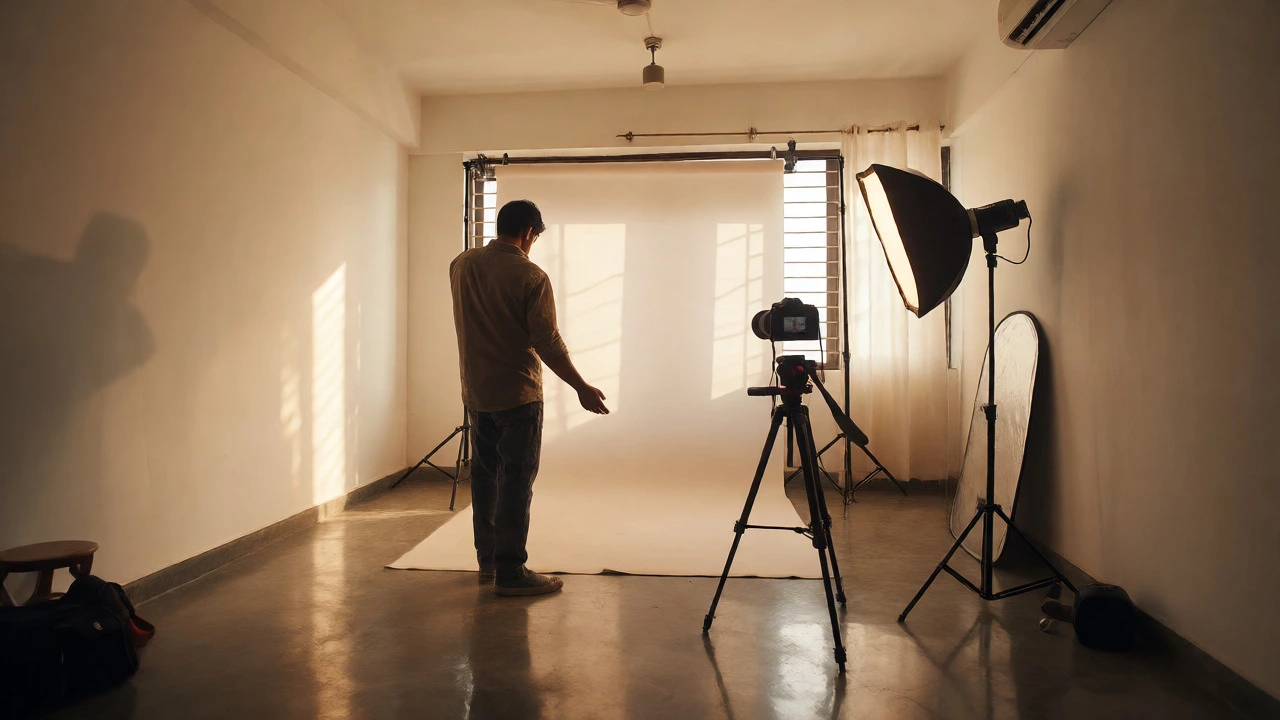
In India, location isn’t just about foot traffic; it’s about accessibility for clients and logistics for you. If you’re starting small, you might skip commercial rent entirely. Many photographers start with a dedicated room in their house. In cities like Bangalore or Hyderabad, converting a spare room costs almost nothing if you already own the property. Just paint the walls white or grey, clear the clutter, and you’re good to go.
But if you need a commercial space, brace yourself. In Tier-1 cities like Mumbai or Delhi, a 500 sq ft studio can easily cost ₹40,000-₹80,000 per month. Add a 3-to-6-month deposit, and you’ve spent ₹2-5 lakhs before buying a single light stand. In Tier-2 cities like Jaipur, Indore, or Coimbatore, you can find decent spaces for ₹15,000-₹25,000. Pro tip: Look for ground-floor shops with high ceilings. Low ceilings kill natural light and make flash setups cramped.
Gear: What You Actually Need vs. What You Want
This is where most beginners overspend. You don’t need a ₹3 lakh Sony A1 to take great portraits. You need reliable gear that doesn’t fail during a paid shoot.
DSLR/Mirrorless Camera is the core tool for capturing images, typically costing between ₹80,000 and ₹2,00,000 for professional-grade entry-level models. For starters, a Canon EOS R8 or Nikon Z5 body paired with a versatile 24-70mm f/2.8 lens covers 90% of studio work. Avoid cheap kit lenses; they lack the sharpness and bokeh clients expect.
Then there’s Studio Lighting, which provides controlled illumination essential for professional results, ranging from affordable continuous lights to expensive strobe systems. Don’t buy three identical flashes. Buy one powerful strobe (like Godox AD400Pro) and learn to use it well. Then add a second. Quality over quantity. Continuous LED panels are cheaper but struggle with freezing motion, so strobes are still king for portraits.
Don’t forget modifiers. A bare flash looks harsh. Softboxes, umbrellas, and reflectors shape the light. Budget at least ₹15,000-₹30,000 for two softboxes and a boom arm. Without them, your photos will look flat.
Backgrounds and Props: Creating Versatility
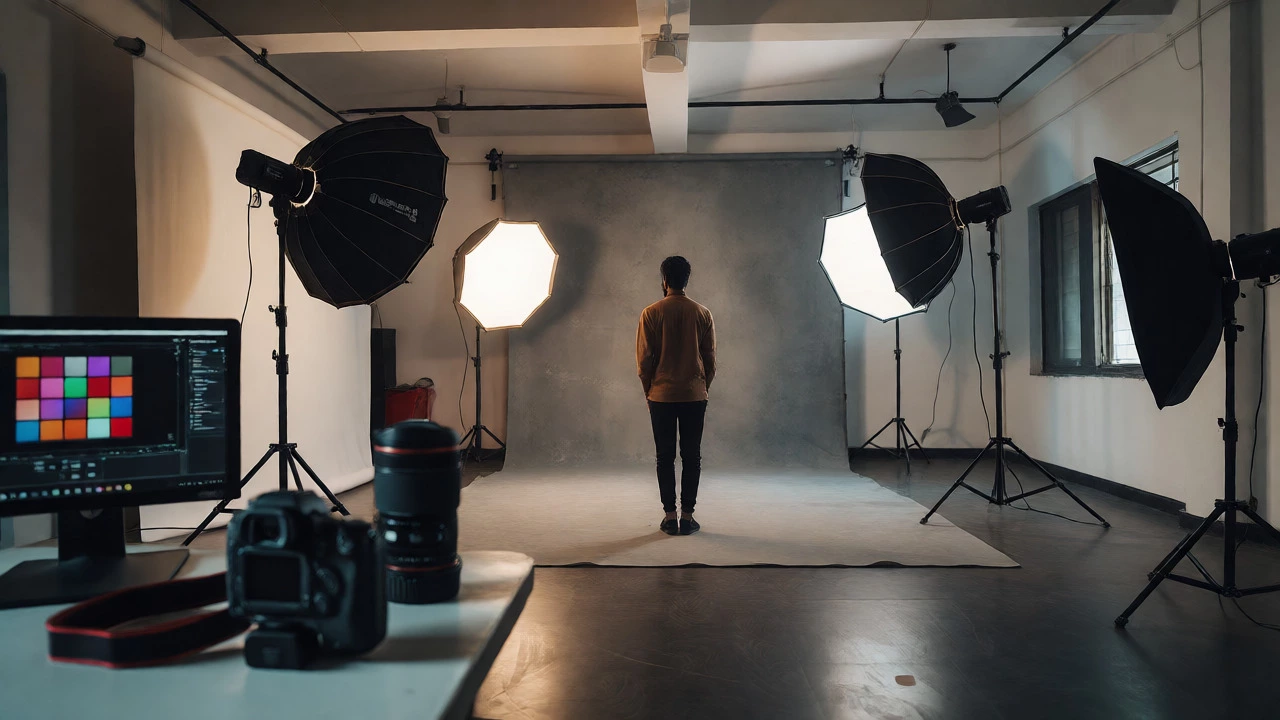
You can’t shoot everything against a white wall. Clients want variety. You need a system to swap backgrounds quickly. Paper rolls are the standard. They come in various colors and widths (usually 44 inches or 60 inches). A basic background support system costs around ₹5,000-₹10,000. Each paper roll costs ₹1,500-₹3,000. Stock up on white, grey, black, and maybe a textured fabric option.
Props depend on your niche. For baby shoots, you need baskets and blankets. For product photography, you need acrylic blocks and colored cards. Start with generic props that fit multiple genres. Custom-built wooden platforms or painted backdrops can be DIY projects, saving you thousands if you’re handy.
The Post-Production Setup: Where the Magic Happens
Your camera captures the image, but your computer sells it. You need a machine that handles heavy RAW files without lagging. An Apple M2 MacBook Air or a custom PC with an RTX 4060 GPU and 32GB RAM is the sweet spot for price-performance in 2026. Expect to spend ₹1,00,000-₹1,50,000.
A color-calibrated monitor is non-negotiable. If your screen shows wrong colors, your prints will too. Brands like Dell Ultrasharp or ASUS ProArt offer accurate sRGB coverage for under ₹30,000. Pair this with a fast SSD (1TB NVMe) for storage. External HDDs are fine for backups, but editing off a slow drive frustrates you and wastes time.
Hidden Costs: The Stuff No One Tells You
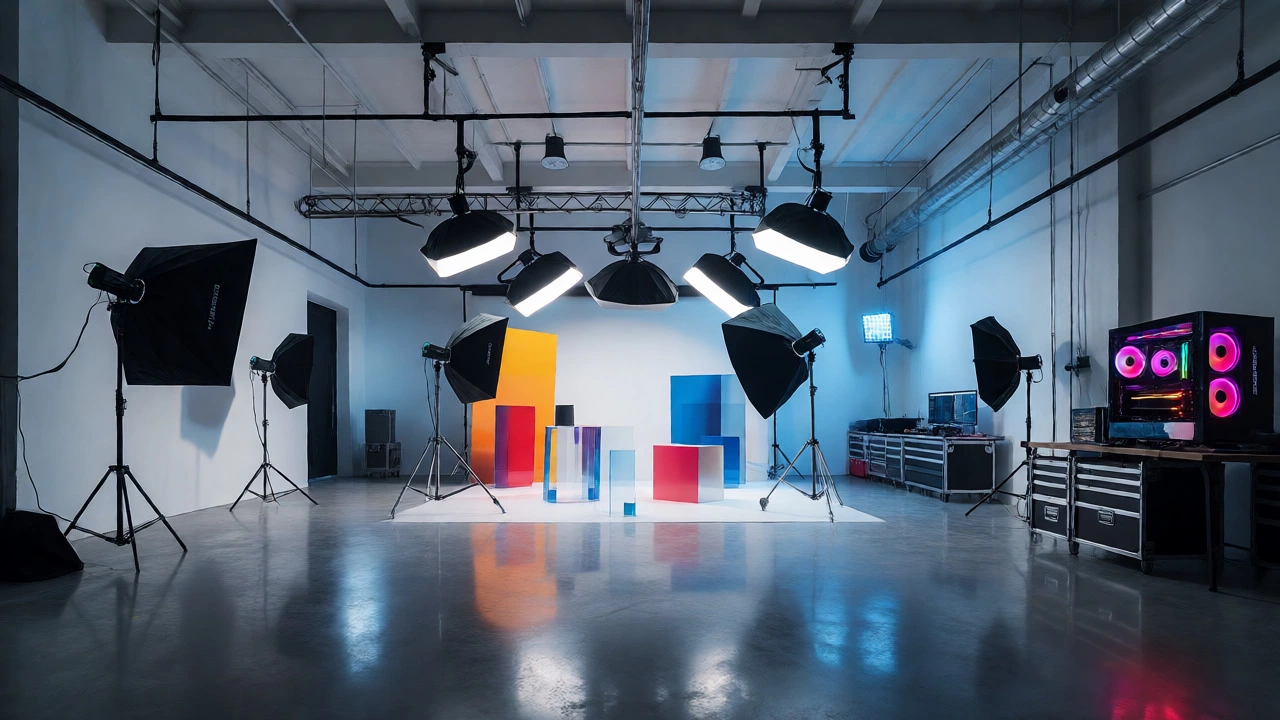
Here’s where budgets explode. First, electricity. Studio lights draw significant power, especially if you run air conditioning in Indian summers. Factor in higher utility bills. Second, maintenance. Cameras break, lenses get fungus, and software subscriptions renew annually. Adobe Creative Cloud alone costs roughly ₹4,000/month. Third, insurance. If you drop a ₹1 lakh lens on a client’s floor, who pays? Get equipment insurance-it’s cheap peace of mind.
Also, consider marketing. You can’t just open doors and hope people walk in. You need a website, social media ads, and business cards. Allocate ₹50,000 for initial branding and digital presence. A simple WordPress site with a booking plugin works fine initially.
Strategies to Save Money Without Sacrificing Quality
If ₹10 lakhs feels steep, here’s how to cut corners smartly:
- Buy Used Gear: Platforms like OLX or specialized camera forums often have gently used lenses. Check shutter count and condition carefully. You can save 30-40% on bodies and lenses.
- Start with Natural Light: If your space has large windows, invest in reflectors instead of expensive strobes initially. It’s free light!
- DIY Backgrounds: Paint a section of the wall matte grey or hire a local artist to create a textured backdrop. It lasts longer than paper rolls.
- Share Space: Rent a co-working studio by the hour. This eliminates fixed rent and lets you test demand before committing to a lease.
Building a studio is a marathon, not a sprint. Start lean, validate your market, and upgrade gear as revenue grows. The best studio isn’t the one with the most expensive lights; it’s the one that makes clients feel comfortable and delivers consistent results.
Is it cheaper to build a home studio or rent commercial space?
Initially, a home studio is significantly cheaper because you avoid rent and deposits. However, commercial spaces offer professionalism and separate work-life boundaries. If you plan to meet many clients face-to-face, commercial rent becomes worth the investment once you have steady bookings.
Do I need a specific type of flooring for a photo studio?
Yes. Carpet absorbs sound and can be hard to clean, while tiles can echo. Polished concrete or vinyl flooring is ideal because it’s durable, easy to sweep, and doesn’t reflect unwanted light. Avoid shiny surfaces that cause glare under studio lights.
How much should I charge per hour to cover my studio costs?
Calculate your monthly fixed costs (rent, utilities, subscriptions) and divide by the number of billable hours you expect to book. Add a margin for gear depreciation. In India, freelance studio rentals range from ₹1,500 to ₹5,000 per hour depending on city and amenities included.
Can I start a studio with just continuous lighting?
Yes, especially for video content or static portraits. Continuous LEDs are easier to visualize and cheaper upfront. However, for freezing action or using wide apertures in bright conditions, strobes are superior. Many pros start with LEDs and switch to strobes as they advance.
What is the biggest mistake new studio owners make?
Over-investing in gear before securing clients. Many buy ₹5 lakh worth of equipment only to realize they prefer outdoor shoots or lack the marketing skills to fill the calendar. Validate your business model with minimal viable gear first.