Indian Home Building: Costs, Trends, and What Really Matters
When you think about Indian home building, the process of constructing residential properties in India, from rural villages to urban apartments. Also known as residential construction in India, it’s not just about bricks and mortar—it’s about navigating local rules, cultural needs, and rising material costs. Whether you’re building your first house in Pune or expanding a family home in Lucknow, the reality is very different from what you see in glossy magazines.
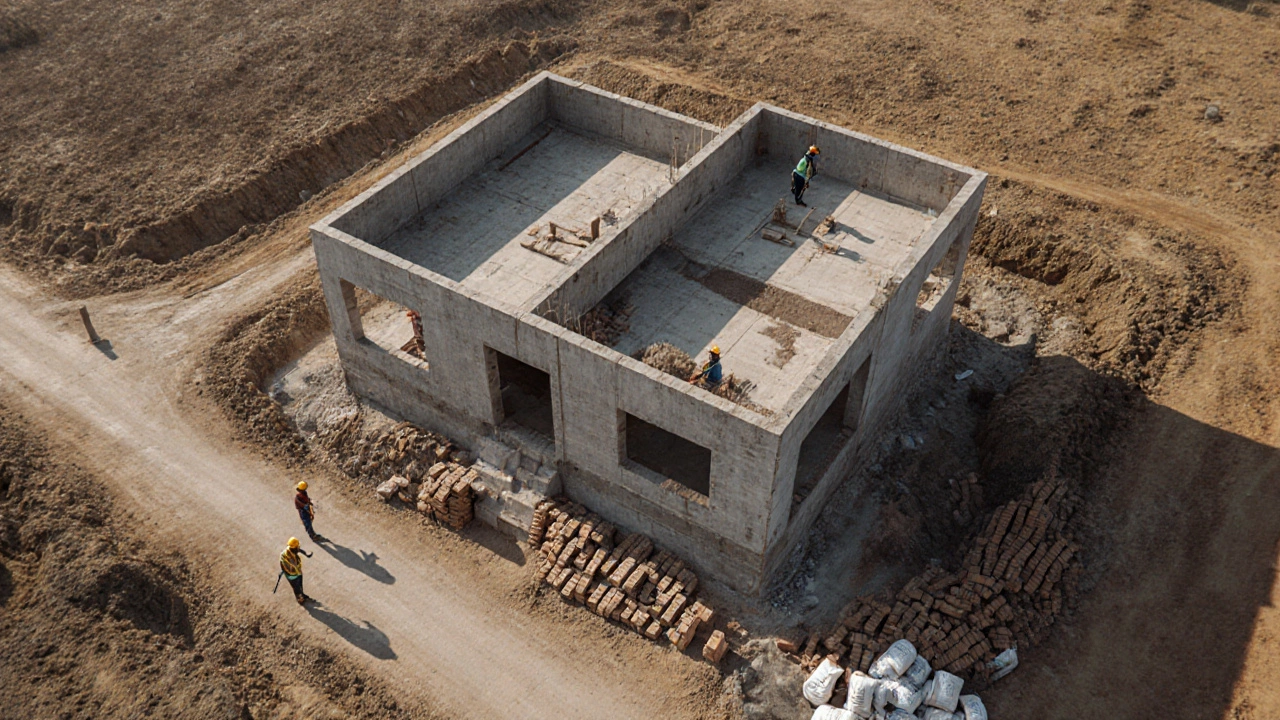
Most people assume Indian home building means hiring an architect and waiting a year. But in many towns, it’s a family affair. You might buy cement from a local dealer, hire a mason who’s worked for 30 years, and skip permits because your neighbor did the same last year. The house building cost in India, the total expense to construct a home, including materials, labor, and legal fees varies wildly—₹1,200 per sq.ft. in a small city, ₹3,500+ in Mumbai or Bangalore. And that’s before you factor in the rising price of steel or the cost of getting electricity connected.
Then there’s the design. Indian architecture, the style and structure of buildings shaped by regional climate, tradition, and modern demands isn’t just about columns and courtyards anymore. Today’s homes blend open-plan living with traditional pooja rooms, solar panels with clay tile roofs. In South India, homes are built with thick walls to keep heat out. In the North, they focus on insulation for winter. And in cities, space is so tight that even a 1,000 sq.ft. home needs every inch planned.
Permits, approvals, and paperwork? They’re not optional anymore. Cities like Hyderabad and Chennai now require building plan approvals before you lay a single brick. And if you skip the residential construction, the legal and practical process of building homes for personal or family use regulations, you could end up with a structure that can’t be sold, insured, or even connected to water lines.
What you won’t find in most guides? The real stories. Like the family in Jaipur who saved for five years just to buy land, or the couple in Coimbatore who built their home in phases—first a bedroom, then a kitchen, then a bathroom—because they couldn’t afford it all at once. Or how many builders now use recycled bricks to cut costs and stay eco-friendly.
There’s no one-size-fits-all in Indian home building. Your budget, your location, your family size, even your caste or community can shape what your home looks like. And while apps and online calculators promise to tell you the exact cost, the truth is always in the details—what your local mason charges, how far the nearest sand quarry is, whether your plot has a drainage plan.
Below, you’ll find real insights from people who’ve been through it—how many photos they took during their build, what they wish they’d known before signing the contract, and why some of the cheapest options turned out to be the most expensive in the end. No fluff. Just what works in India today.