What Are the Drone Rules in India 2024? A Clear Guide for Photographers
 Nov, 17 2025
India Drone No-Fly Zone Checker
Check Your Flight Compliance
Ensure you're flying legally in India by checking no-fly zones, altitude limits, and registration requirements for your drone.
If you're planning to fly a drone for photography in India in 2024, you can't just show up with your quadcopter and start shooting. The rules changed dramatically in 2021, and they keep getting tighter. What used to be a free-for-all is now a tightly regulated system with real penalties - fines, confiscation, even jail time. This isn't about being overly cautious. It's about staying legal, safe, and avoiding disaster.
Drone Classification in India
India doesn't treat all drones the same. The Directorate General of Civil Aviation (DGCA) divides drones into five categories based on weight. This matters because your category determines what you can and can't do.
- Nano: Up to 250 grams - the smallest. These are often toy drones. You don’t need a license to fly them, but you still can't fly them over crowds or near airports.
- Micro: 250 grams to 2 kg - most consumer photography drones like DJI Mavic or Air models fall here.
- Small: 2 kg to 25 kg - used by professionals, surveyors, and commercial operators.
- Medium: 25 kg to 150 kg - rare for photographers, mostly used for heavy cargo or industrial tasks.
- Large: Over 150 kg - not relevant for photography.
If you're using a DJI Mini 3 Pro (249g), you're in the Nano category. But if you're flying a DJI Mavic 3 Classic (915g), you're in Micro. That distinction changes everything.
Registration and Licensing
Since December 2021, every drone - except Nano - must be registered on the Digital Sky Platform. That’s the official government portal. You can't fly legally without a Unique Identification Number (UIN) for your drone.
For Micro, Small, Medium, and Large drones, you also need a Remote Pilot License (RPL). You can't just buy a drone and start flying commercially. You need to pass a training course from a DGCA-approved institute, take a written test, and get certified. The license lasts five years and costs about ₹2,500.
Even if you're flying for fun, if your drone weighs more than 250 grams, you still need to register it. No exceptions. Many photographers think, “I’m not selling the photos, so I don’t need it.” That’s wrong. The rule applies to ownership, not use.
Where You Can’t Fly: No-Fly Zones
India has strict no-fly zones. These aren’t suggestions - they’re enforced with radar and penalties.
- Airports: 5 km radius around all operational airports - including small airstrips.
- Military bases: Everything marked on the Digital Sky map. This includes training grounds, ammunition depots, and even some defense research centers.
- International borders: 50 km from the border with Pakistan, China, Bangladesh, Nepal, Bhutan, Myanmar, and Sri Lanka.
- Government buildings: The Parliament, state legislatures, Supreme Court, and any central government office.
- Atomic energy sites: Nuclear plants and research facilities are off-limits.
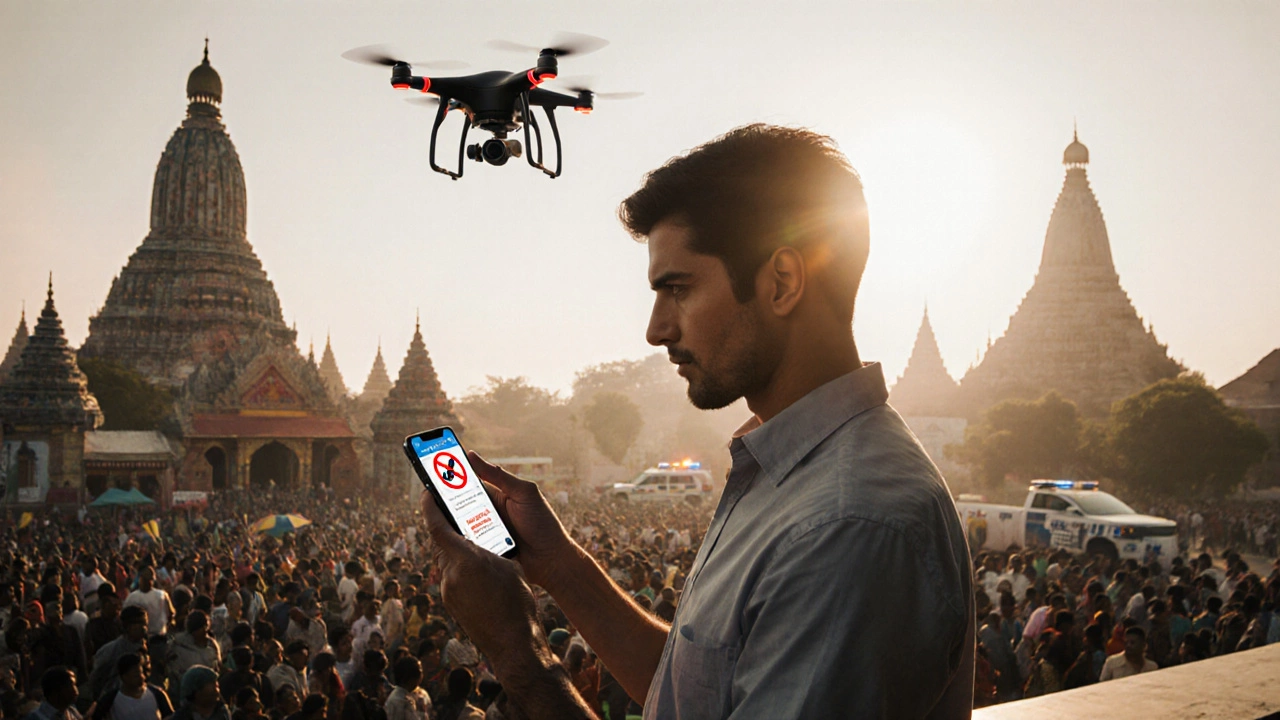
- Public gatherings: If there’s a crowd of more than 100 people - like a festival, protest, or sports match - you can’t fly above it.
Here’s the catch: you can’t fly over private property without permission. Even if you’re just taking a photo of someone’s house from above, you need their written consent. Many photographers get fined for this without realizing it.
Altitude Limits and Flight Rules
Altitude matters. In India, you’re not allowed to fly higher than 400 feet (122 meters) above ground level - no exceptions. Even if your drone can go higher, the law caps it at 400 feet.
You must fly during daylight only. Night flying is banned unless you have special permission from DGCA - which is rarely granted to photographers.
You must keep your drone within visual line of sight. No using binoculars or FPV goggles to extend your range. You must be able to see the drone with your own eyes at all times. This kills the idea of flying far away for landscape shots unless you’re in a very open area.
And you can’t fly over moving vehicles. That means no following cars, trains, or boats unless you have special clearance.
Commercial vs. Recreational Use
There’s a big difference between flying for fun and flying for money. If you’re selling the photos, posting them on a paid portfolio, or using them for advertising - that’s commercial use. You need the RPL and UIN.
Even if you’re not charging directly, if you’re promoting your photography business on social media using drone shots, that’s still commercial. The DGCA looks at intent. If your drone footage helps you get clients, it’s commercial.
For hobbyists, you still need to register if your drone is over 250g. You don’t need the RPL, but you must still follow altitude, no-fly, and privacy rules. One mistake: many think “I’m just a hobbyist” gives them freedom. It doesn’t.
Penalties for Breaking the Rules
India doesn’t mess around with drone violations. Fines start at ₹25,000 and can go up to ₹1 lakh (about $1,200 USD). Repeat offenders face jail time - up to one year.
Police and aviation authorities use radar and apps to detect illegal drones. If you’re caught flying in a no-fly zone, they can seize your drone on the spot. No warning. No second chance.
One real case: a photographer in Jaipur flew over a temple during a festival. He got fined ₹75,000, lost his drone, and had to appear in court. He didn’t know the temple was inside a no-fly zone.
How to Stay Compliant
Here’s how to fly legally in India:
- Check your drone’s weight. If it’s over 250g, register it on Digital Sky.
- If you’re flying commercially, get your Remote Pilot License.
- Use the Digital Sky app to check real-time no-fly zones before every flight.
- Never fly higher than 400 feet.
- Never fly near airports, borders, or crowds.
- Get written permission if you’re flying over private property.
- Always fly in daylight and keep the drone in sight.
Many photographers use apps like Drone Harmony or Map Pilot to map flight paths and check restricted zones. These aren’t official, but they help avoid mistakes.
What’s Changing in 2025?
India is moving toward automated drone traffic management. By 2025, you’ll need to connect your drone to a real-time air traffic system. This means your drone will have to report its location to the government while flying - even if you’re just taking a photo in your backyard.
There are also talks of mandatory geofencing for all drones sold in India. That means your drone won’t even turn on in a no-fly zone. This isn’t science fiction - it’s already happening with DJI drones sold in India.
Final Tip: Always Check Before You Fly
Rules change fast. What was allowed last month might be banned today. Always open the Digital Sky app right before you fly. It shows live restrictions, weather alerts, and temporary no-fly zones (like for VIP movements or emergencies).
Don’t assume you know the rules. Don’t rely on YouTube tutorials from 2022. The law is clear: if you’re flying a drone in India in 2024, you’re responsible for knowing and following every rule. There’s no excuse for ignorance.
Do I need a license to fly a drone for photography in India?
Yes - if your drone weighs more than 250 grams. You need to register it on the Digital Sky Platform. If you’re using it for commercial purposes - like selling photos or promoting your business - you also need a Remote Pilot License (RPL). Even hobbyists must register drones over 250g.
Can I fly a drone over my own house in India?
Not without permission. Even if you own the property, you need written consent from anyone living in or near the house. India’s privacy laws treat aerial surveillance as a potential violation. Flying over your own home is allowed only if you’re not recording people or private areas.
What happens if I fly a drone in a no-fly zone?
You can be fined up to ₹1 lakh (about $1,200), your drone will be confiscated, and you may face criminal charges. Authorities use radar and drone detection systems to catch violators. There’s no warning - enforcement is immediate.
Can I fly a drone at night in India?
No. Night flying is banned for all drones unless you have special permission from the DGCA. This permission is rarely given to photographers. Even with lights, flying after sunset is illegal.
Is DJI Mavic 3 legal in India?
Yes - but only if it’s registered on Digital Sky and you have the required license. The DJI Mavic 3 weighs 915g, so it falls under the Micro category. You must register it and get an RPL if using it commercially. You also need to avoid no-fly zones and fly below 400 feet.
Do I need insurance for drone photography in India?
Not legally required for hobbyists, but mandatory for commercial operators. If you’re running a photography business, you must have third-party liability insurance covering at least ₹10 lakh. It protects you if your drone crashes into a building or injures someone.