What Does DSLR Mean? A Simple Guide to Digital Cameras
 Aug, 11 2026
DSLR vs. Mirrorless Decision Tool
Select the features that matter most to you. The tool will recommend the best camera type for your situation.
DSLR Camera
Mirrorless Camera
Recommendation:
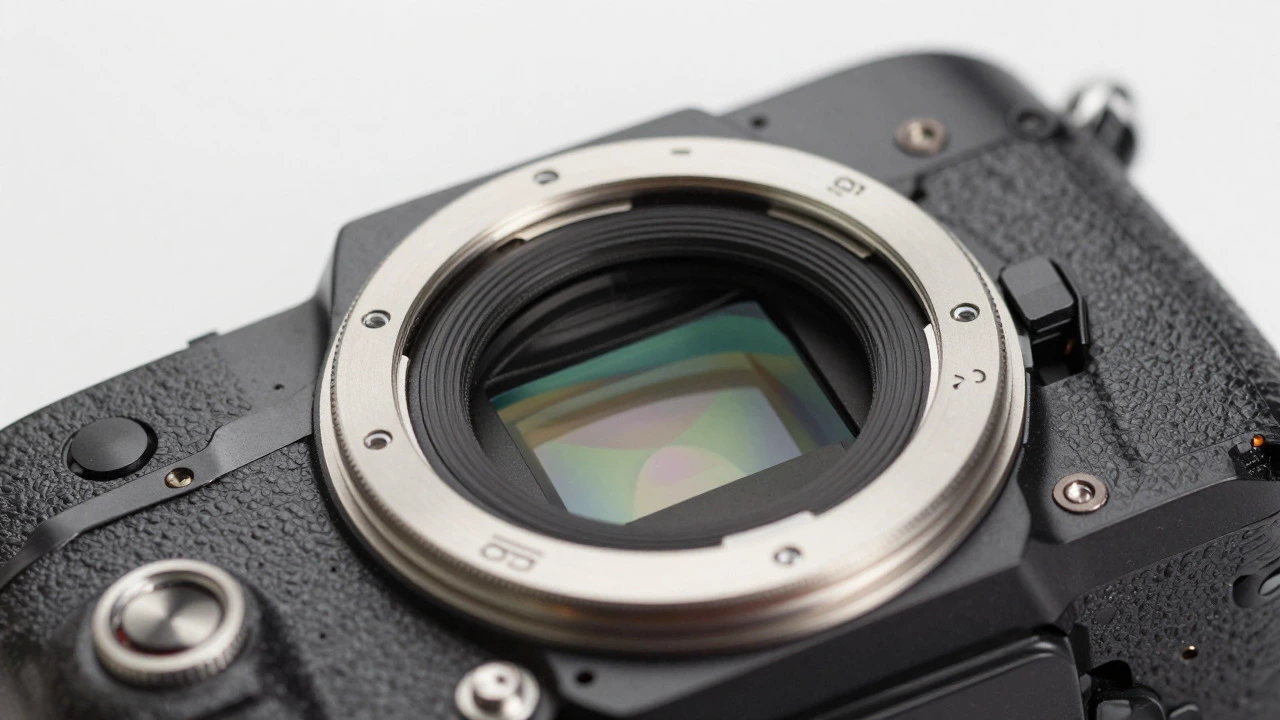
Have you ever walked into a camera shop or scrolled through an online listing and felt overwhelmed by acronyms like DSLR is a type of digital camera that uses a mirror mechanism to reflect light from the lens up into an optical viewfinder? You are not alone. For decades, this term has been the gold standard for serious photography. But what does it actually mean, and more importantly, do you still need one in 2026?
At its core, a DSLR stands for Digital Single-Lens Reflex. It sounds technical, but the concept is mechanical and straightforward. Unlike your smartphone or a compact point-and-shoot, a DSLR separates the path of light used for viewing the scene from the path used for capturing the image. This separation allows for a direct, real-time view of exactly what the sensor will record, without any digital lag.
How a DSLR Camera Works Inside
To understand why these cameras were so popular, you have to look under the hood. The magic happens with a few moving parts working in perfect sync.
- The Lens: Light enters through the glass elements of the lens.
- The Mirror: Inside the camera body, there is a small mirror positioned at a 45-degree angle. This mirror reflects the incoming light upwards.
- The Pentaprism/Pentamirror: The light bounces off the mirror into a prism (or a cheaper mirror assembly) located at the top of the camera. This corrects the image orientation so it looks right-side up.
- The Optical Viewfinder: You look through the eyepiece and see the exact scene coming through the lens. There is no screen involved here; it is pure optics.
- The Sensor: When you press the shutter button, the mirror flips up out of the way. The light then travels straight down to hit the image sensor is the electronic component that captures light and converts it into digital data.
This mechanical process is fast and reliable. Because you are looking through the actual lens via a mirror, there is zero delay between what you see and what you get. This was a huge advantage over early digital cameras that relied on tiny LCD screens for framing.
Key Components That Define a DSLR
Not all DSLRs are created equal. They generally fall into two categories: entry-level and professional. However, they all share specific attributes that define their performance.
| Feature | Entry-Level DSLR | Professional DSLR |
|---|---|---|
| Sensor Size | APS-C (Crop Sensor) | Full-Frame |
| Autofocus Points | 9 to 45 points | 61 to 100+ points |
| Battery Life | 600-800 shots per charge | 1,200-3,000+ shots per charge |
| Build Quality | Plastic body, basic weather sealing | Magnesium alloy, full weather sealing |
| Video Capabilities | 1080p or 4K with limitations | High-bitrate 4K/8K, advanced codecs |
The sensor size is particularly important. An APS-C sensor is smaller than a full-frame sensor. This affects your field of view, making lenses appear longer (telephoto). Full-frame sensors capture more light, resulting in better low-light performance and shallower depth of field-that blurry background effect photographers love.
DSLR vs. Mirrorless: The Big Shift
If you are buying a new camera today, you will likely encounter Mirrorless cameras are digital cameras that lack the internal mirror mechanism found in DSLRs, using electronic viewfinders instead. This is where things get interesting. In 2026, the industry has largely shifted toward mirrorless technology. Why?
Mirrorless cameras remove the mirror and the pentaprism. Instead of bouncing light to your eye, the sensor sends the image directly to an Electronic Viewfinder (EVF) is a small high-resolution screen inside the camera eyepiece that displays a live digital feed from the sensor or the rear LCD screen. This change brings several advantages:
- Size and Weight: Without the bulky mirror box, mirrorless bodies are significantly smaller and lighter.
- Advanced Autofocus: Modern mirrorless systems use phase detection pixels directly on the sensor, allowing for incredible subject tracking, including eye and face detection for humans and animals.
- WYSIWYG (What You See Is What You Get): With an EVF, you can see how changes in aperture, shutter speed, and white balance affect the final image before you take it. In a DSLR, you only see the result after taking the photo.
However, DSLRs still hold their ground in specific areas. The optical viewfinder provides a natural, lag-free experience that some photographers prefer for fast-action sports. Additionally, DSLR batteries last much longer because the optical viewfinder consumes almost no power.
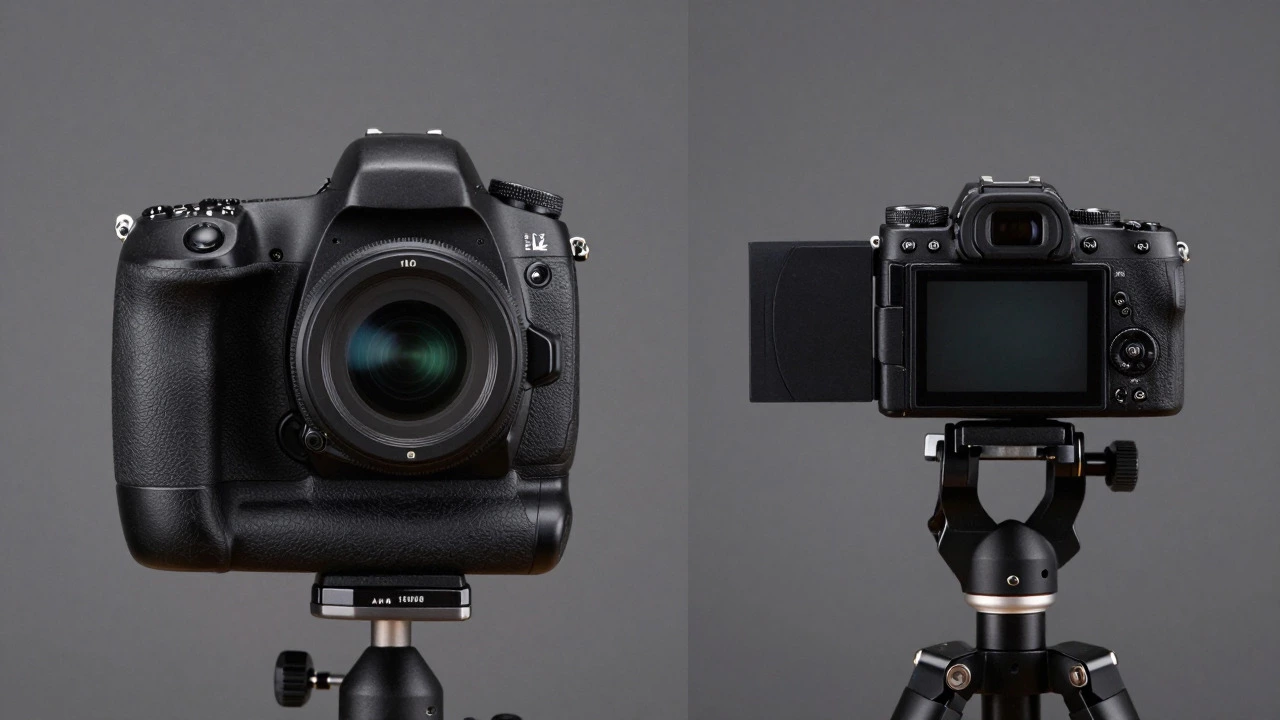
Why You Might Still Choose a DSLR in 2026
Given the rise of mirrorless, why would anyone buy a DSLR now? There are valid reasons, especially if you are on a budget or already own gear.
Cost Efficiency: As manufacturers shift focus to mirrorless, older DSLR models and lenses have dropped in price. You can find high-quality used DSLRs and lenses for a fraction of the cost of new mirrorless equivalents. If you are a beginner, a used Canon EOS Rebel or Nikon D3500 offers tremendous value.
Lens Availability: Decades of lens production mean there is a vast ecosystem of affordable glass for DSLR mounts. Whether you need a cheap wide-angle for landscapes or a telephoto for wildlife, the second-hand market is rich with options.
Battery Endurance: For events like weddings or long outdoor shoots where charging opportunities are scarce, the battery life of a DSLR is unmatched. A single charge can often last an entire day of shooting.
Understanding Camera Sensors and Image Quality
The heart of any digital camera is the sensor. In DSLRs, you will mostly encounter two types: CMOS and CCD. Today, nearly all modern DSLRs use CMOS sensors are Complementary Metal-Oxide-Semiconductor sensors that allow for faster readout speeds and lower power consumption compared to older CCD technology.
Sensor resolution is measured in megapixels (MP). A common misconception is that more megapixels always mean better quality. While higher resolution allows for larger prints and more cropping flexibility, pixel size matters too. Larger pixels capture more light, reducing noise in low-light conditions. A 24-megapixel full-frame sensor often produces cleaner images than a 40-megapixel APS-C sensor in dim lighting.
Dynamic range is another critical attribute. This refers to the camera's ability to capture details in both the brightest highlights and darkest shadows simultaneously. Professional DSLRs excel here, preserving detail in challenging lighting scenarios that would blow out on a smartphone.
Essential Accessories for DSLR Photography
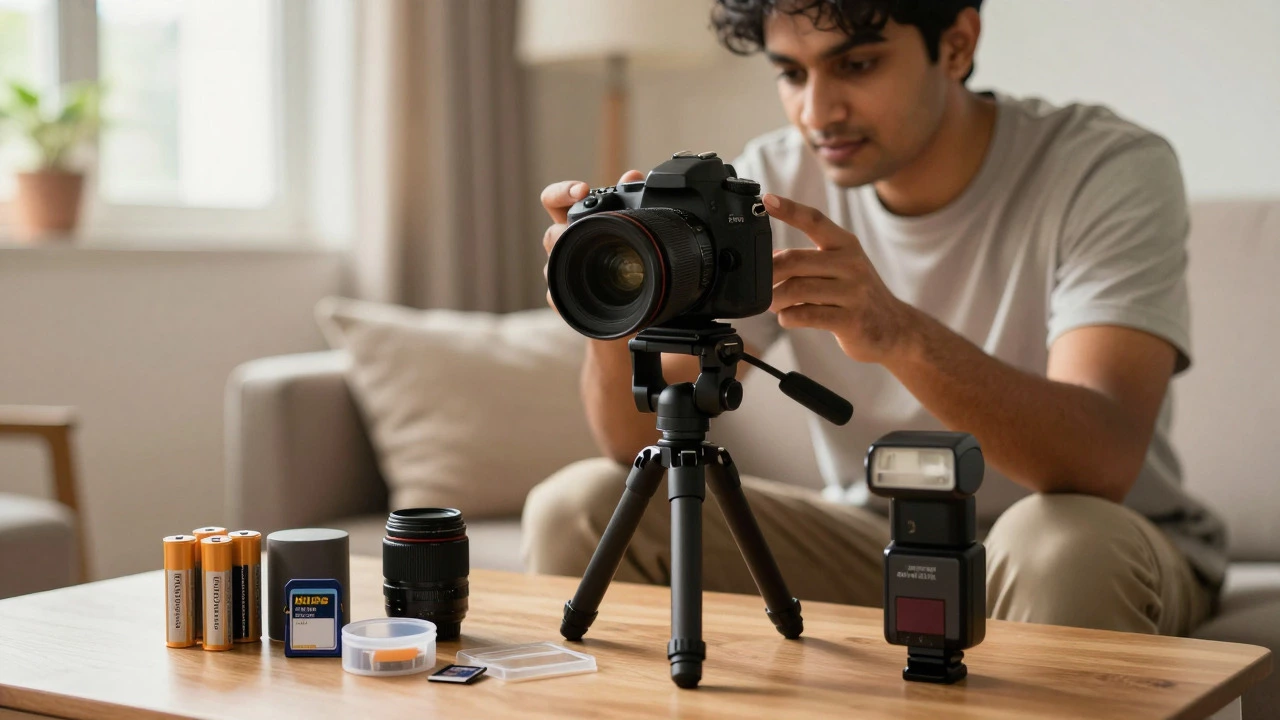
Buying the camera is just the beginning. To get the most out of your DSLR, you need the right accessories.
- Extra Batteries: Even with good battery life, having a spare ensures you never miss a shot.
- Memory Cards: Invest in fast SD cards (UHS-II) to handle continuous shooting bursts and 4K video without buffering delays.
- Lens Cleaning Kit: Dust on the sensor or lens can ruin photos. A blower, microfiber cloth, and cleaning solution are essential.
- Sturdy Tripod: For long exposures, landscapes, or self-portraits, a stable platform is non-negotiable.
- External Flash: Built-in flashes are weak. An external speedlight gives you control over lighting direction and intensity.
Is a DSLR Right for You?
Deciding whether to buy a DSLR depends on your goals and budget. If you are a student, hobbyist, or someone who wants to learn photography fundamentals without breaking the bank, a used DSLR is an excellent choice. The manual controls force you to understand exposure triangle concepts-aperture, shutter speed, and ISO-in a tangible way.
However, if you prioritize video content creation, vlogging, or want the latest autofocus technology for wildlife and sports, a mirrorless camera might be a better investment. The future of camera development is clearly mirrorless, meaning new features and innovations will primarily appear in that format.
Ultimately, the best camera is the one you enjoy using and carry with you. Whether it is a vintage DSLR or a sleek mirrorless body, the tool matters less than the eye behind the lens.
What is the difference between a DSLR and a mirrorless camera?
The main difference is the presence of a mirror. DSLRs use a mirror to reflect light to an optical viewfinder, while mirrorless cameras send light directly to the sensor and display the image on an electronic viewfinder or screen. Mirrorless cameras are generally smaller and have more advanced autofocus features, while DSLRs offer longer battery life and an optical viewfinder with no lag.
Are DSLRs obsolete in 2026?
Not entirely. While most major manufacturers have stopped developing new DSLR models, existing DSLRs remain highly capable tools. They are especially popular among beginners due to their affordability on the used market and their excellent battery life. However, for cutting-edge technology and video capabilities, mirrorless is the current standard.
Do I need a full-frame DSLR?
It depends on your needs. Full-frame sensors offer better low-light performance and dynamic range, making them ideal for professional work. However, APS-C crop sensor DSLRs are sufficient for most enthusiasts and beginners. They are also lighter and cheaper, both for the body and the lenses.
Can I use DSLR lenses on mirrorless cameras?
Yes, usually with an adapter. Most mirrorless cameras can accept DSLR lenses from the same brand using a simple mount adapter. This allows you to keep your existing lens collection when upgrading to a mirrorless system, though some autofocus features may be limited depending on the adapter and camera model.
What is the best DSLR for beginners?
Popular choices include the Canon EOS Rebel T7 (or newer variants) and the Nikon D3500. These cameras are user-friendly, have good image quality, and are widely available on the used market at affordable prices. They offer enough manual control to help you learn photography fundamentals without being overly complex.