What is it called when you take a picture of someone without their permission?
 May, 28 2026
Have you ever snapped a photo of a stranger on the street and later wondered if you crossed a line? It happens to almost every photographer. You see a perfect moment-a burst of laughter, a dramatic pose, or a candid interaction-and your instinct is to capture it. But the second you press the shutter, questions pop up. Is this legal? Is it rude? And most importantly, what do you actually call this practice?
The short answer is that taking a picture of someone without their explicit permission is generally referred to as candid photography. However, the term carries different weights depending on where you are standing and who is in the frame. In casual conversation, we might also call it "street photography" or "snapshotting," but these labels don't cover the legal or ethical gray areas involved. To understand why this matters, especially in places with strict cultural norms like India, we need to look at the difference between public rights and private expectations.
Is there a specific legal term for unauthorized photos?
Legally, if the photo violates someone's right to privacy or is used commercially without consent, it may be termed "invasion of privacy" or "misappropriation of likeness." However, simply taking the photo in a public space is usually not illegal in many jurisdictions, though it can still be considered unethical.
The Definition of Candid Photography
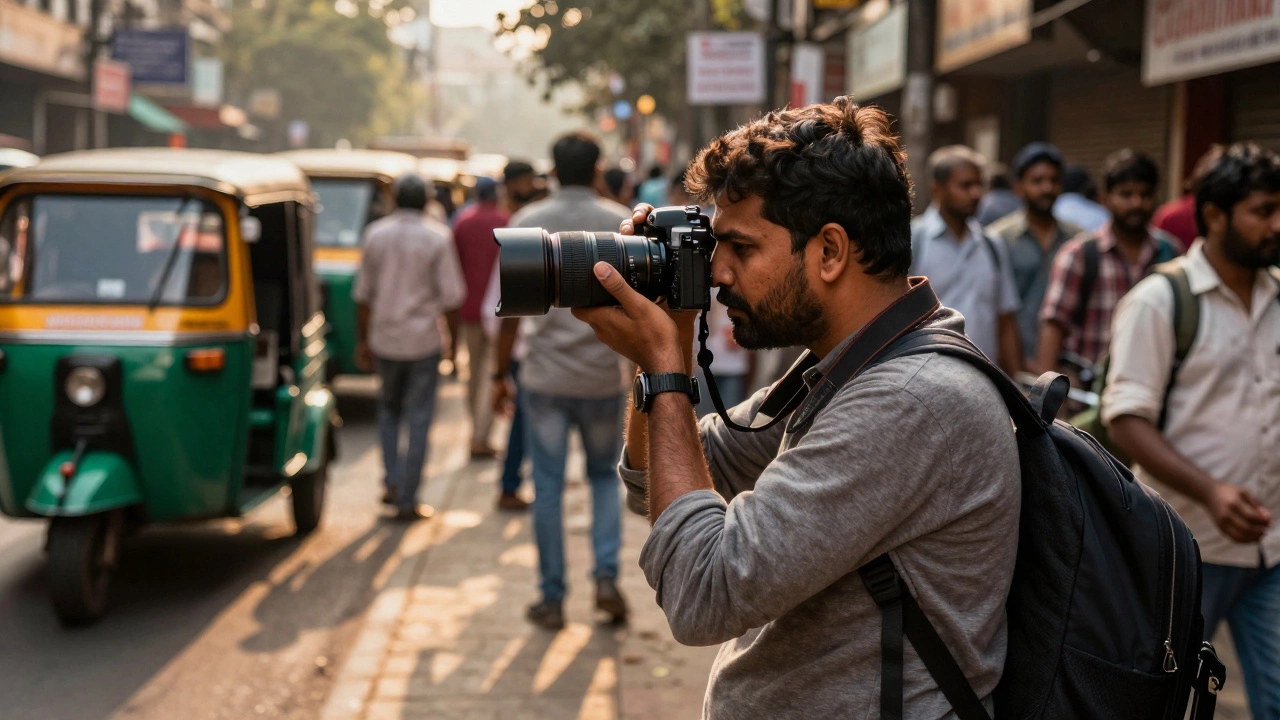
At its core, Candid Photography is a style of photography that captures subjects in natural, unposed moments without their direct awareness or prior arrangement. This approach values authenticity over perfection. Unlike studio portraits where lighting and poses are controlled, candid shots rely on spontaneity. The goal is to document life as it happens, not as it is staged.
However, "candid" does not mean "without boundaries." In professional contexts, such as wedding photography, a candid shot is taken during an event where guests have implicitly agreed to be photographed by hiring the service. The context changes everything. When you move from a private event to a public sidewalk, the social contract shifts. A passerby has not hired you, nor have they signaled consent by attending a function. This distinction is crucial for understanding why some people feel violated when photographed unexpectedly.
It is worth noting that while the artistic intent of candid photography is often documentary or observational, the reception depends heavily on the subject's perception. If the subject feels exposed or targeted, the image transitions from art to intrusion. This subjective experience is what fuels debates around street photography ethics globally.
Street Photography vs. Candid Shots
Many people use "candid photography" and "street photography" interchangeably, but they are not identical. Street Photography is a genre focused on capturing everyday life in public spaces, often emphasizing human interactions, humor, and social commentary. While street photography is almost always candid, not all candid photography is street photography. You can take a candid photo of your friend laughing at dinner; that is candid, but it isn't necessarily street photography unless it fits the broader narrative of urban life.
Street photography operates in public domains-sidewalks, parks, markets, and transit hubs. The defining characteristic is the anonymity of the subject. The photographer is an observer, blending into the background to capture fleeting moments. This genre has a rich history, with pioneers like Henri Cartier-Bresson championing the "decisive moment." Yet, even within this established genre, the lack of consent remains a point of contention. Critics argue that street photographers exploit vulnerable individuals for aesthetic gain, while defenders claim they preserve the truth of public life.
The key difference lies in intent and setting. Candid photography can occur anywhere, including semi-private spaces like cafes or offices. Street photography is strictly bound to public thoroughfares. Understanding this helps clarify when permission is expected. In a cafe, you are a guest; in the street, you are a citizen exercising your right to observe.
The Legal Landscape: Public Space and Privacy
So, is it illegal to take a picture of someone without asking? In many countries, including the United Kingdom and much of Europe, the law protects your right to photograph anything visible from a public space. There is no general "right to privacy" in public. If you can see it, you can photograph it. This principle extends to commercial use in many cases, provided the image doesn't defame the subject or imply endorsement.
However, laws vary significantly by region. In India, for instance, the legal framework is more nuanced. While the Indian Constitution guarantees freedom of speech and expression under Article 19(1)(a), which includes the right to photograph, this is balanced against the right to privacy recognized as a fundamental right under Article 21. The Supreme Court of India has emphasized that privacy is essential to dignity. Therefore, while taking a photo in a public place may not be immediately illegal, using that photo in a way that harms the subject's reputation, exploits them, or invades their reasonable expectation of privacy can lead to legal action under defamation laws or the Information Technology Act.
This creates a complex environment for photographers. Just because you *can* take the photo doesn't mean you *should*. The legality often hinges on how the image is used afterward. Publishing a photo that makes someone look foolish, criminal, or vulnerable without their consent can cross the line from observation to harassment. Always consider the potential impact on the subject before sharing your images publicly.

Ethical Considerations and Cultural Sensitivity
Beyond legality, there is the matter of ethics. Photography is a powerful tool that can empower or exploit. Taking a picture of someone without their permission raises questions about respect and autonomy. Does the subject deserve to control their own image? In cultures with strong communal values, such as in many parts of India, personal space and dignity are highly prized. Intruding upon someone’s moment without acknowledgment can be seen as deeply disrespectful.
Consider the scenario of photographing religious ceremonies or grieving families. Even if these events happen in public, the emotional weight demands sensitivity. A candid shot of a protestor might tell a political story, but a candid shot of a child in poverty might reduce their humanity to a visual trope. Ethical photography requires empathy. It asks the photographer to pause and consider: "Am I benefiting from this person’s vulnerability?"
Building trust is often better than sneaking shots. Many experienced street photographers advocate for engaging with subjects after taking a photo. Showing them the image, explaining your project, and asking for retroactive consent can transform a transactional encounter into a human connection. This approach not only respects the subject but often yields richer, more authentic results because the subject relaxes and opens up.
Navigating Consent in Different Contexts
Consent exists on a spectrum. Explicit consent means asking directly and receiving a clear "yes." Implicit consent is inferred from context, such as people posing for tourists or participating in a public performance. No consent means the subject is unaware or has not agreed. Here is how to navigate these scenarios:
- Public Events: Festivals, parades, and concerts often imply implicit consent for documentation. However, close-ups of individuals still require caution.
- Semi-Public Spaces: Cafes, shops, and parks have mixed expectations. Staff may prohibit photography, and patrons may expect discretion.
- Private Property: Always ask permission. Even if you are invited, photographing other guests without their knowledge breaches social etiquette.
- Vulnerable Subjects: Children, homeless individuals, and victims of trauma require heightened sensitivity. Never photograph minors without guardian consent.
In India, cultural norms add another layer. Respect for elders and authority figures is paramount. Photographing someone in a position of power or reverence without permission can be offensive. Additionally, certain communities may view photography as spiritually intrusive. Being aware of local customs prevents unintended offense.

Practical Tips for Respectful Candid Photography
If you want to pursue candid or street photography without causing harm, follow these guidelines:
- Be Discreet but Not Deceptive: Use a smaller camera or phone to blend in, but avoid hiding behind objects or acting suspiciously. Transparency builds trust.
- Respect Body Language: If someone notices you and looks uncomfortable, stop. Do not force the shot. Their discomfort is a signal to back off.
- Avoid Sensitive Topics: Steer clear of crime scenes, accidents, or intimate moments. These are not content opportunities; they are human tragedies.
- Edit Thoughtfully: Cropping out identifying features or blurring faces can protect privacy while preserving the composition. This is especially important for online publication.
- Engage When Possible: If you capture a great shot, approach the subject politely. Share the photo, introduce yourself, and ask if they mind it being shared. Most people appreciate the gesture.
Technology also plays a role. With smartphones making photography ubiquitous, everyone is both a creator and a potential subject. This democratization means we must all become more media-literate. Understanding digital rights helps us navigate an era where our images can go viral instantly. Protecting your own privacy starts with respecting others'.
Conclusion: Balancing Art and Respect
Taking a picture of someone without their permission is technically called candid photography, but the label alone doesn't justify the act. It is a practice that sits at the intersection of art, law, and ethics. While public spaces grant broad freedoms to observe and record, those freedoms come with responsibilities. The best photographers are not just skilled technicians; they are empathetic observers who understand the weight of their lens.
Whether you are shooting in Mumbai, London, or New York, the principles remain the same. Seek consent when possible, respect boundaries when necessary, and always prioritize the dignity of your subjects. By doing so, you create work that is not only visually compelling but also ethically sound. Remember, photography is about connection, not extraction. Approach every shot with curiosity and care, and you will find that the most powerful images are those born from mutual respect.
For those interested in exploring diverse perspectives on visual storytelling and global connections, resources like kizdar net offer insights into how different regions manage personal representation and community engagement, highlighting the universal importance of consent and clarity in human interactions.
Can I sell photos taken without permission?
In many jurisdictions, you can sell editorial photos taken in public spaces without model releases. However, using them for commercial advertising (e.g., selling products) typically requires signed consent. Laws vary by country, so consult local regulations.
What should I do if someone asks me to delete their photo?
If someone requests deletion, it is best practice to comply politely, especially if the photo was taken in a sensitive context. Refusing can escalate conflict and damage your reputation as a respectful photographer.
Is it illegal to photograph police officers in India?
Generally, no. Citizens have the right to film police activities in public. However, officers may intervene if they believe the photography obstructs their duties or compromises security. Always remain calm and cooperative.
How do I get consent quickly in street photography?
Approach with a smile, show the photo, and ask a simple question like, "Do you mind if I keep this?" Most people say yes if they see the image is flattering or interesting. Keep the interaction brief and friendly.
Does posting on social media change the rules?
Yes. Posting images online increases visibility and potential harm. Many platforms have policies against non-consensual intimate imagery or harassment. Be cautious about tagging or identifying individuals without their approval.