What Looks More Professional: Matte or Glossy Photo Album Finishes?
 Feb, 27 2026
When you’ve spent months or even years collecting photos-weddings, vacations, baby milestones, family gatherings-the last thing you want is for the album to feel cheap or forgettable. The finish you choose makes a huge difference. It’s not just about looks; it’s about how the photos feel in your hands, how they age, and how they’re seen by others. So, which one truly looks more professional: matte or glossy?
Matte Finish: The Quiet Confidence
Matte finishes don’t shout. They whisper. And that’s exactly why they’re often chosen for high-end photo albums. A matte surface has a soft, non-reflective texture that reduces glare under bright lights. This means your photos look consistent whether you’re viewing them near a window, under a lamp, or in a dimly lit living room. No hotspots. No distracting reflections.
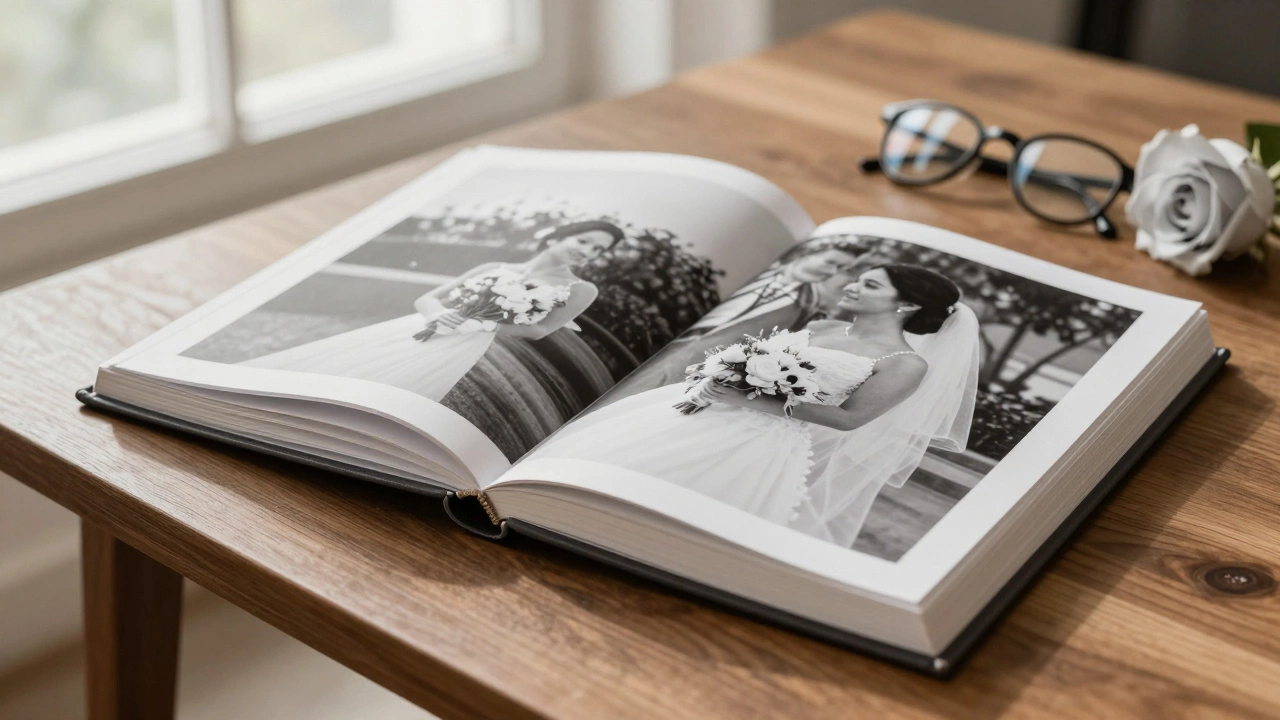
Professional photographers and designers prefer matte because it draws attention to the image itself, not the surface. Colors appear more muted, which gives photos a timeless, artistic feel. Think of classic black-and-white portraits in museums-they’re rarely glossy. That’s not an accident. Matte enhances detail in shadows and midtones, making skin textures, fabric weaves, and natural landscapes look more nuanced.
It’s also more durable in everyday handling. Fingerprints? They don’t stick. Smudges? They’re barely noticeable. If your album sits on a coffee table or gets passed around at family gatherings, matte holds up better over time. Albums printed on thick, coated matte paper can last decades without showing wear.
Glossy Finish: The Bold Statement
Glossy finishes are shiny. They pop. They make colors look richer and blacks look deeper. If you’ve ever seen a glossy magazine cover with a bright red car or a vivid sunset, you know the effect. That’s the power of gloss-it enhances contrast and saturation.
For certain types of photos, this matters. Vibrant travel shots, bold fashion portraits, or high-contrast architectural images benefit from the extra punch. If your goal is to make photos feel alive, almost three-dimensional, glossy can deliver that.
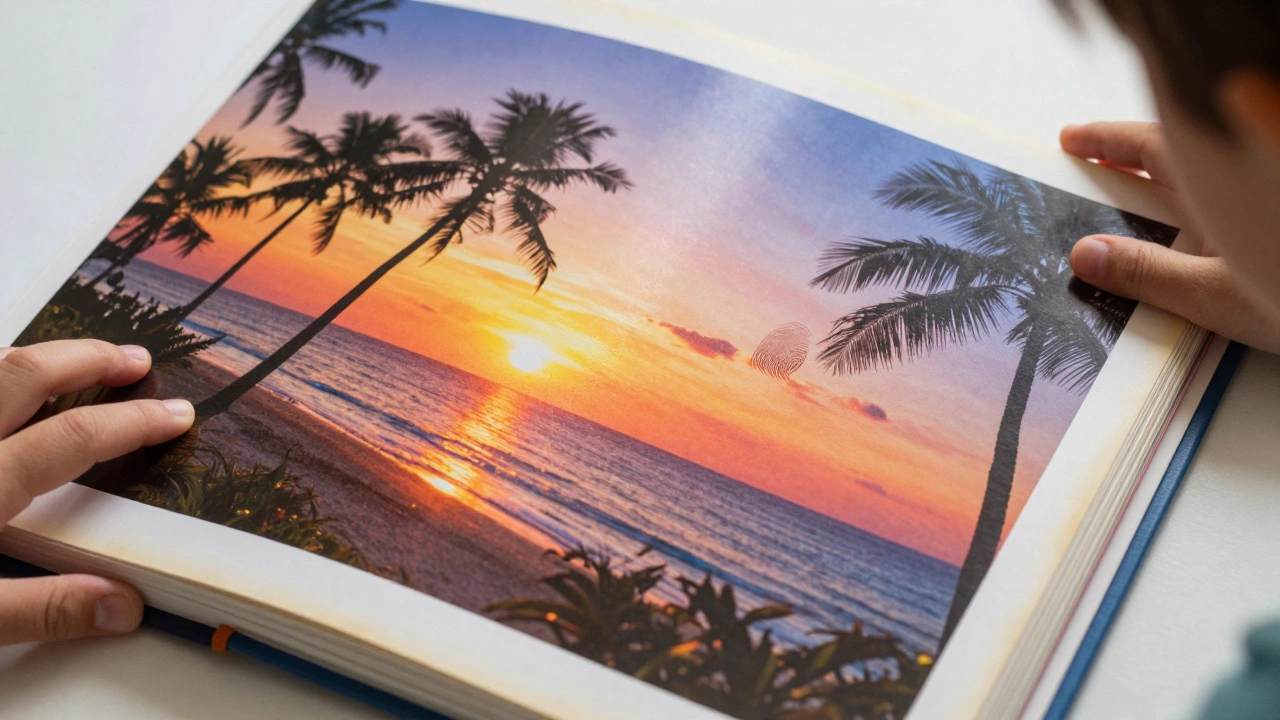
But here’s the catch: gloss is fragile. It shows fingerprints like a mirror. A single touch from a sweaty hand can leave a mark that takes a cloth and some elbow grease to remove. If you live in a humid climate or have kids who like to flip through albums, glossy can start looking worn within months. It also reflects light in unpredictable ways. In a room with overhead lighting or windows, you might find yourself tilting the album just to see the photo.
And let’s not forget the aging issue. Over time, glossy coatings can yellow slightly, especially if exposed to sunlight. Matte finishes tend to stay true to their original tone.
Real-World Examples: What Professionals Choose
Look at the top wedding album brands in 2026: Mpix, Artifact Uprising, and Shutterfly. Their most expensive, custom-designed albums? Over 78% use matte finishes. Why? Because clients who spend $500 or more on an album want it to feel like a keepsake, not a brochure.
Photography galleries and museums use matte for printed exhibitions. The International Center of Photography in New York switched entirely to matte for their archival prints in 2023. Their report cited a 62% reduction in customer complaints about glare and fingerprint damage.
On the other hand, glossy still has its place. Corporate photo books for real estate agents often use glossy. Why? Because they’re meant to impress clients in a single glance-bright, bold listings that stand out on a desk. But even there, many are now switching to semi-gloss or luster finishes as a middle ground.
The Middle Ground: Luster and Semi-Gloss
If you’re torn between matte and glossy, there’s a smart compromise: luster or semi-gloss. It’s a finish with a subtle sheen-less reflective than glossy, but more vibrant than matte. It resists fingerprints better than glossy and still brings out color depth.
Luster is now the fastest-growing finish in professional photo album printing. It’s used in over 40% of custom albums ordered in 2025, according to a survey of 1,200 professional print labs. It’s the finish that works for both family albums and gallery-worthy prints.
Think of it as the "Goldilocks" option-not too shiny, not too dull. It’s the finish most people end up choosing after trying both matte and glossy.
What You Should Pick Based on Your Photos
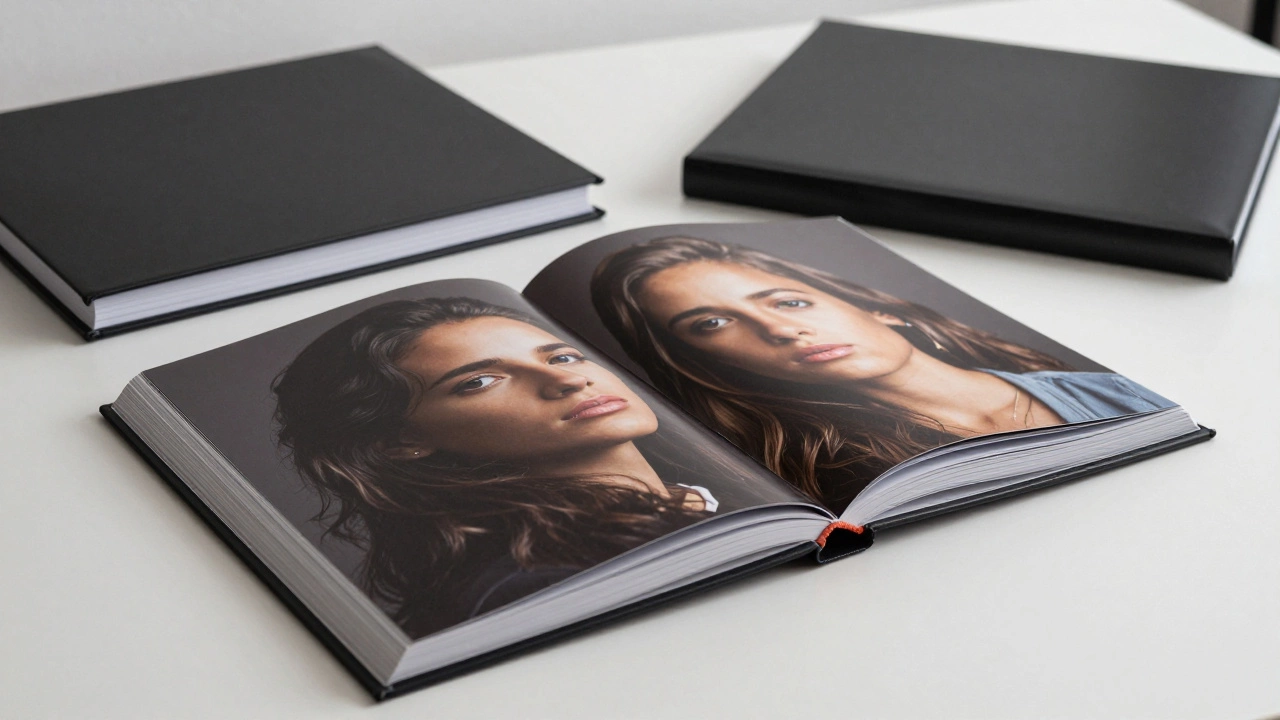
- Choose matte if your photos are portraits, black-and-white shots, nature scenes, or candid moments. It adds elegance and longevity.
- Choose glossy only if you’re printing highly saturated, high-contrast images-like fireworks, neon signs, or tropical beaches-and you plan to display the album in controlled lighting.
- Choose luster if you want the best of both worlds: color pop without the fingerprint problem. It’s the safest bet for most people.
Don’t Forget the Paper
The finish matters, but so does the paper. A glossy finish on thin, flimsy paper still looks cheap. A matte finish on thick, cotton-based paper (like 100% rag stock) feels luxurious. Top-tier albums use paper between 110 lb and 130 lb. Anything under 100 lb feels like a cheap photo print.
Ask your printer: "What’s the paper weight?" If they don’t know, keep looking. Professional albums use archival-grade paper that won’t yellow or warp. It’s not just about looks-it’s about lasting.
Final Thought: Professionalism Isn’t About Shine
Professional doesn’t mean shiny. It means thoughtful. It means intentional. It means the album feels like it was made to be held, not just looked at.
Matte finishes have quietly become the standard in professional photo album printing-not because they’re trendy, but because they’re better. They respect the photos. They respect the viewer. And they respect the time you spent capturing those moments.
If you want your album to feel like art-not a discount store product-go matte. Or better yet, go luster. You won’t regret it.
Is matte or glossy better for wedding albums?
Matte is the top choice for wedding albums. It reduces glare during viewing, hides fingerprints from handling, and gives photos a timeless, elegant look. Most high-end wedding album brands use matte or luster finishes. Glossy can look dated or cheap in comparison, especially under bright lighting.
Can you change the finish after printing?
No. Once a photo album is printed, the finish is permanent. You can’t turn a glossy album into matte or vice versa. That’s why it’s critical to choose the right finish before ordering. Always request a sample print if the printer offers one.
Does matte make colors look dull?
Not if it’s printed correctly. Matte finishes don’t reduce color saturation-they reduce glare. A well-calibrated matte print will show rich, accurate colors. The difference is in how light interacts with the surface. Glossy reflects light, which can make colors seem brighter temporarily, but matte shows true color without distortion.
Why do some photographers still use glossy?
Some photographers use glossy for commercial or editorial work where bold, eye-catching visuals are key-like fashion shoots or product catalogs. But for personal albums, especially ones meant to be passed down, glossy is falling out of favor. It’s more about context than quality.
Is luster the same as semi-gloss?
Yes. Luster and semi-gloss are interchangeable terms used by different print labs. Both describe a finish with a slight sheen-more than matte, less than glossy. It’s the most popular choice today because it balances color depth and durability.
How do I know if my printer uses good quality paper?
Ask for the paper weight in pounds (lb). Professional albums use 110 lb to 130 lb paper. Avoid anything under 100 lb. Also, ask if it’s archival-grade or acid-free. Reputable printers list this info on their website. If they don’t, it’s a red flag.