How Much Does a Small Factory Cost in India?
 Dec, 1 2025
Small Factory Cost Calculator for India
Estimate the total costs for setting up a small manufacturing unit in India. Input your specific parameters to get a realistic budget breakdown based on 2025 pricing data.
Setting up a small factory in India isn’t just about buying machines. It’s about understanding land, permits, labor, and hidden costs that can make or break your budget. Many people think they can start a factory for under ₹50 lakh, but the real number often hits ₹1.5 crore or more - depending on what you’re making and where you’re making it.
What Kind of Small Factory Are You Thinking About?
Not all small factories are the same. A bakery with three ovens costs less than a plastic injection molding unit. A garment stitching unit with 15 sewing machines is cheaper than a metal fabrication shop with CNC machines. Your product type drives the biggest part of your cost.
For example:
- A small food processing unit (packaged snacks, pickles, or juices) might need ₹25-50 lakh for basic equipment, packaging lines, and a clean room setup.
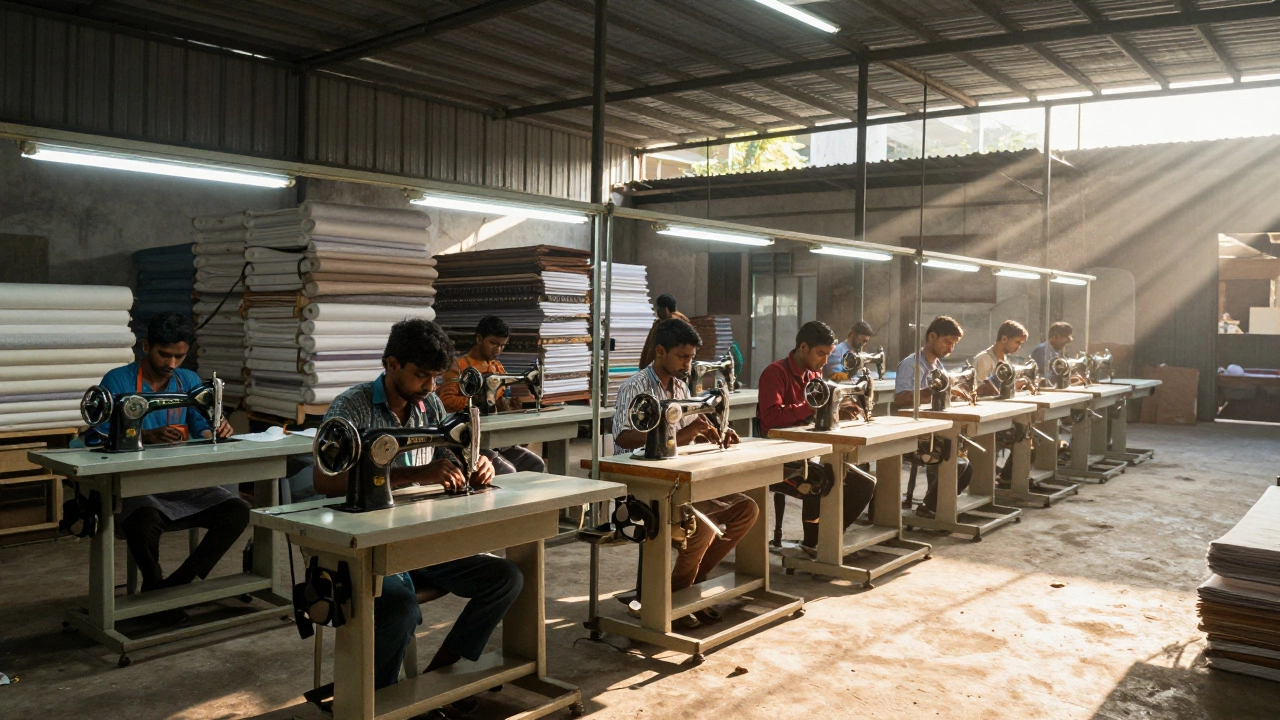
- A textile or garment unit with 20-30 sewing machines, cutting tables, and ironing stations runs around ₹40-70 lakh.
- A plastic or rubber molding unit with a 50-ton injection machine, dryer, and mold storage can easily hit ₹1.2-2 crore.
- A metal fabrication shop with welding stations, bending machines, and a small CNC cutter starts at ₹80 lakh and can go up to ₹1.8 crore.
These aren’t guesses. They’re based on real quotes from manufacturers in Tamil Nadu, Gujarat, and Uttar Pradesh in 2025. The price of a 30-ton injection molding machine alone jumped 18% since 2023 due to global supply chain shifts and local import duties on German and Chinese parts.
Land and Building: The Silent Cost Killer
You can’t avoid land. Even if you rent, the cost is baked into your monthly payments. In industrial zones near cities like Pune, Ahmedabad, or Coimbatore, industrial plots start at ₹800-1,200 per sq. ft. A 5,000 sq. ft. shed? That’s ₹40-60 lakh just for the plot.
But here’s what most beginners miss: zoning laws. You can’t just buy any plot and call it a factory. You need an industrial classification from the local municipal body. If your land is in a residential or agricultural zone, you’ll need special permission - which can take 6-12 months and cost ₹5-10 lakh in legal fees alone.
Building a basic shed with concrete flooring, steel roofing, and minimal insulation costs ₹1,000-1,500 per sq. ft. So for a 5,000 sq. ft. unit, that’s another ₹50-75 lakh. Add electricity connections, water lines, sewage, and fire safety systems - and you’re looking at another ₹10-15 lakh.
Permits, Licenses, and Paperwork
India’s regulatory maze isn’t just slow - it’s expensive. You need at least five key licenses before you turn on a single machine:
- MSME Registration - Free, but you need it to qualify for subsidies.
- Factory License under the Factories Act, 1948 - ₹5,000-₹20,000 depending on state and number of workers.
- Environmental Clearance - Mandatory if you’re using chemicals, dyes, or emitting smoke. Costs ₹50,000-₹3 lakh, depending on scale and pollution risk.
- Fire Safety Certificate - ₹15,000-₹50,000. Requires fire extinguishers, exits, and sprinklers.
- Trade License from the local municipality - ₹5,000-₹25,000.
And don’t forget GST registration, EPF/ESI for employees, and FSSAI if you’re in food. Some states, like Karnataka and Telangana, offer online portals to speed this up. Others, like Bihar or Jharkhand, still require in-person visits to multiple offices. Plan for 3-6 months and ₹1-2 lakh in professional fees for consultants who know how to navigate this.
Equipment: What You Actually Need
Equipment is where budgets explode. You might think you can buy secondhand machines to save money - but that’s often a trap. A 10-year-old sewing machine might cost ₹20,000, but if it breaks down every two weeks, you lose more in downtime and repairs than you saved.
Here’s what you really need to buy new:
- Power backup - A 20 kVA diesel generator costs ₹3-4 lakh. Power cuts are common outside major cities.
- Compressed air system - Needed for pneumatic tools, packaging, or injection molding. ₹4-8 lakh.
- Material handling - Forklifts, trolleys, pallets - ₹2-5 lakh.
- Quality control tools - Calipers, thickness gauges, tensile testers - ₹1-3 lakh.
- IT and accounting software - ERP systems for small factories start at ₹1.5 lakh/year.
Many factory owners skip these and regret it later. One owner in Ludhiana told me he saved ₹3 lakh by not installing a compressed air system - then spent ₹4.5 lakh in lost production and damaged products over six months.
Labour: The Biggest Recurring Cost
Labour in India is cheap - but not as cheap as you think. A skilled machine operator in Tamil Nadu earns ₹18,000-₹25,000/month. A supervisor? ₹35,000-₹50,000. Add HR, quality control, and maintenance staff, and you’re looking at 8-12 people minimum.
That’s ₹1.5-2.5 lakh/month in salaries alone. Then there’s PF, ESI, bonus, and leave. By law, you must contribute 12% of salary to PF and 3.25% to ESI. That adds another 15-20% to your payroll cost.
And you can’t just hire and fire. Labour laws in India make it hard to lay off workers without government approval - especially if you have more than 100 employees. Even with 50 workers, you need to justify layoffs. Plan for long-term commitment.
Hidden Costs Nobody Talks About
Here are the costs that catch people off guard:
- Raw material storage - You need dry, ventilated space. If you’re storing plastic pellets or fabric, humidity control is essential. ₹5-10 lakh for shelving and dehumidifiers.
- Waste disposal - Plastic scraps, metal shavings, chemical waste - you can’t just dump it. Licensed waste handlers charge ₹10,000-₹50,000/month depending on volume.
- Insurance - Fire, theft, machinery breakdown - ₹50,000-₹1.5 lakh/year.
- Utilities - Electricity for 8-10 hours/day can cost ₹60,000-₹1.5 lakh/month, especially if you’re running heavy machinery.
- Marketing and sales - If you’re not selling to big brands, you need a sales team or distributor network. Budget ₹1-3 lakh/year.
One entrepreneur in Noida started a small electronics assembly unit. He spent ₹1.1 crore on machines and building. Then he realized he hadn’t budgeted for EMI on his loan, utility bills, or raw material lead time. Six months in, he was out of cash. He didn’t fail because the market was bad. He failed because he forgot the cash flow cycle.

How to Reduce Costs - Without Cutting Corners
You don’t need to spend ₹2 crore to start. Here’s how smart operators do it:
- Start small - Lease a 2,000 sq. ft. unit instead of buying 5,000. Use shared utilities.
- Use government schemes - PM-MITRA parks offer land at 50% discount in 7 states. MSMEs get 15% subsidy on machinery under the Credit Linked Capital Subsidy Scheme (CLCSS).
- Buy used - but wisely - Get machines from shuttered factories in Punjab or Maharashtra. Get them inspected by a technician before paying.
- Partner with local clusters - In Surat, textile units share dyeing and printing facilities. In Tirupur, 50 small units share a single logistics hub.
- Don’t buy everything at once - Start with core machines. Add packaging, labeling, or automation later.
One woman in Coimbatore started a small towel manufacturing unit with just ₹45 lakh. She leased space, bought 10 used sewing machines, hired 8 workers, and sold directly to local hotels. Two years later, she doubled her output and paid off her loan. She didn’t buy a CNC cutter until year three.
Final Numbers: Realistic Budget Breakdown
Here’s what a realistic small factory setup looks like in 2025:
| Category | Low Estimate (₹) | High Estimate (₹) |
|---|---|---|
| Land (5,000 sq. ft.) | 40,00,000 | 60,00,000 |
| Building Construction | 50,00,000 | 75,00,000 |
| Equipment & Machinery | 40,00,000 | 1,50,00,000 |
| Permits & Legal Fees | 10,00,000 | 20,00,000 |
| Utilities & Infrastructure | 10,00,000 | 20,00,000 |
| Working Capital (3 months) | 20,00,000 | 40,00,000 |
| Total | 1,70,00,000 | 3,65,00,000 |
That’s ₹1.7 crore minimum. If you’re in a metro or high-demand sector like medical devices or electronics, expect to pay more. If you’re in a tier-2 city with government incentives, you might get closer to ₹1.2 crore.
Is It Worth It?
Yes - if you’re ready to run a business, not just a workshop. The profit margins in small-scale manufacturing are thin, but they’re real. A well-run garment unit can turn ₹2 crore into ₹5 crore revenue in 18 months. A food processing unit with branded packaging can hit 30% margins.
But if you’re looking for quick returns, think again. This isn’t a dropshipping business. It takes 12-24 months to break even. You need patience, grit, and a clear sales plan before you buy your first machine.
Can I start a small factory with ₹50 lakh?
Only if you’re doing something very simple - like hand stitching garments or packaging spices - and you rent space instead of buying it. Most serious small factories need at least ₹1.2-1.5 crore to operate sustainably. ₹50 lakh might cover equipment, but not land, permits, or working capital.
Which states are cheapest for setting up a factory in India?
Uttar Pradesh, Madhya Pradesh, and Odisha offer the lowest land prices and state subsidies. Uttar Pradesh’s UP-IPR policy gives up to 25% subsidy on machinery. Madhya Pradesh has industrial parks with free water and power for the first year. Tamil Nadu and Gujarat have better infrastructure but higher land costs.
Do I need a loan to start a factory?
Almost always. Banks like SBI, HDFC, and SIDBI offer MSME loans with 10-12% interest. You’ll need a business plan, collateral (usually land or machinery), and a 15-20% down payment. The government also backs credit guarantees under CGTMSE - which makes it easier to get loans without property.
How long does it take to set up a small factory?
Minimum 6 months if everything goes smoothly - land approval, permits, equipment delivery, and hiring. In states with poor bureaucracy, it can take 12-18 months. Use online portals like Udyam Registration and MSME Samadhaan to speed up paperwork.
Can I run a factory from my home?
Only if your local zoning laws allow it. In most cities, home-based manufacturing is banned unless you have fewer than 10 workers and no noise, pollution, or heavy machinery. Even then, you’ll still need a trade license and GST registration. It’s risky and often leads to shutdowns.