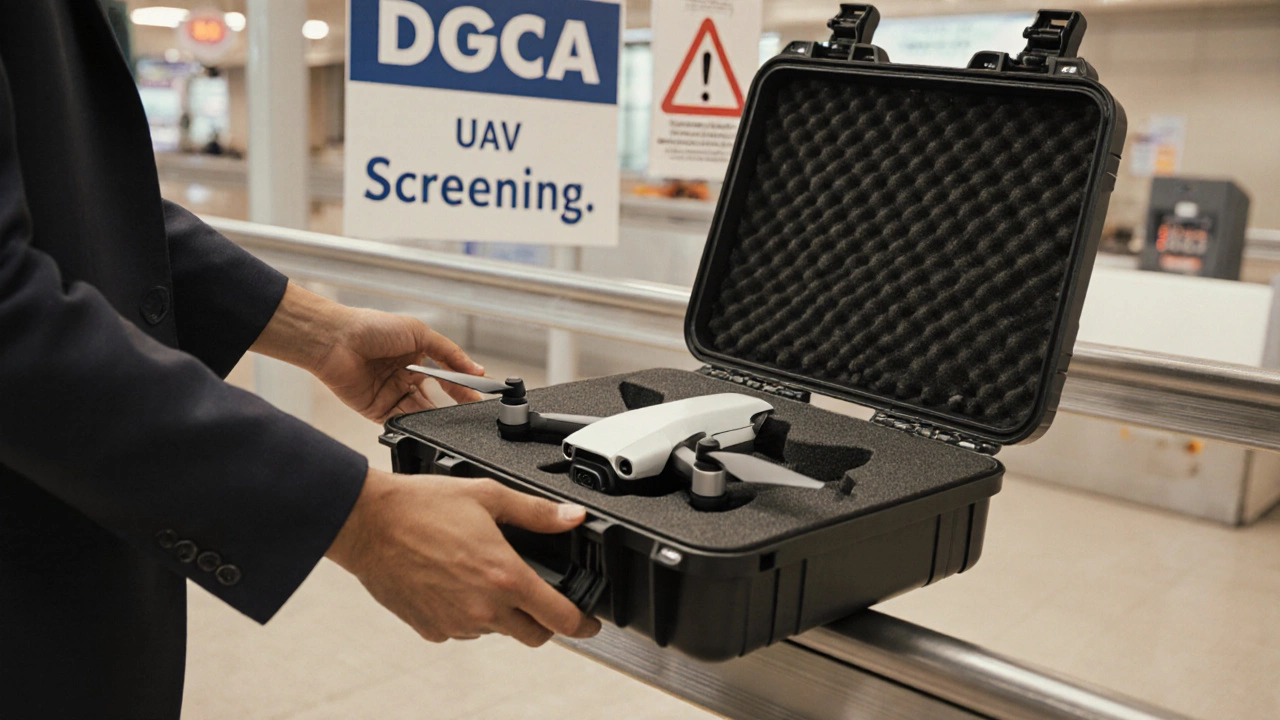
Drone Hand Luggage Rules in India - What You Need to Know
Learn the exact rules for carrying a drone in hand luggage on Indian flights, from weight limits and battery guidelines to airline policies and security tips.
When planning to travel with a drone, understanding drone hand luggage India, the set of rules that govern carrying a drone in your cabin bag while flying within or into India. Also called drone cabin carry, it blends aviation safety, customs policy, and local regulations into a single checklist.
The primary authority behind these rules is the DGCA, India's Directorate General of Civil Aviation, which sets standards for drone registration, NPNT compliance, and permissible flight zones. Without DGCA clearance you risk a seizure at the airport or a hefty fine. Another crucial piece is the NPNP certificate, the No‑Permission‑Needed Permission that proves your drone meets Indian air‑space safety criteria. Airlines also play a role: each carrier has its own battery policy, rules on lithium‑ion cells size, quantity, and packaging for cabin luggage, so you must check the airline’s website before packing.
First, customs duty can add unexpectedly to your travel cost. The Indian customs office classifies drones as electronic devices and may charge up to 10 % of the drone’s declared value, plus GST. Declaring the exact model and UPI‑verified invoice helps avoid delays. Second, the DGCA requires every drone above 250 g to be registered, recorded in the Digi‑Locker system with owner details and a unique ID. Registration links directly to your NPNT status; if the certificate isn’t active, the drone cannot be carried in the cabin.
Third, airline battery limits often dictate the size of the drone you can bring. Most carriers allow batteries up to 100 Wh in the cabin, but anything between 100 Wh and 160 Wh needs airline approval, and over 160 Wh is prohibited. This rule intersects with DGCA’s safety standards, creating a triple check: DGCA registration, NPNT certification, and airline battery clearance. Finally, the travel checklist should include a copy of the DGCA registration PDF, the NPNT digital badge, the customs declaration form, and a pre‑flight safety brief that notes any prohibited zones in India, such as near airports or defense installations.
Putting these pieces together, you can see how drone hand luggage India encompasses registration, customs, and airline policies while DGCA regulations require NPNT and proper documentation. At the same time, customs duty influences the total cost of bringing a drone and airline battery rules determine whether the drone fits in your hand luggage. Understanding these connections lets you pack confidently and avoid surprises at the gate.
Below you’ll find a curated list of articles that break down each step in plain language: how to register with the DGCA, what the NPNT certificate looks like, exact customs duty calculations, airline battery limits, and a printable travel checklist. Dive in and get your drone ready for a smooth flight across India.
Learn the exact rules for carrying a drone in hand luggage on Indian flights, from weight limits and battery guidelines to airline policies and security tips.