Walgreens vs CVS Photo Printing Quality: Which Is Better?
 Oct, 24 2025
When you hand a digital file over to a pharmacy, you expect a photo print quality that does justice to the moment. But does Walgreens consistently out‑shine CVS, or is the rivalry more myth than fact? Let’s break down the tech, the paper, and the real‑world results so you can decide which counter‑top printer deserves your next family portrait.
How Digital Photo Printing Works
Both chains outsource the heavy lifting to large‑format printers, but the underlying technology matters. The two most common methods are Inkjet printing and Dye‑sublimation printing. Inkjet sprays microscopic droplets of pigment onto the paper, while dye‑sublimation uses heat to transfer dye from a ribbon onto a specially coated sheet. Inkjet offers flexibility (you can print on glossy, matte, or even canvas) but can suffer from banding if the printer isn’t calibrated. Dye‑sublimation, on the other hand, creates smooth gradients and is less prone to water spots, though it typically works only with glossy media.
Key Quality Metrics to Watch
Before we compare stores, let’s define the measurable factors that matter to your eyes:
- DPI (dots per inch) - the higher the DPI, the finer the detail. Most consumer labs claim 300 DPI as a baseline, but true 600 DPI machines produce noticeably crisper textures.
- Color gamut - how many shades a printer can reproduce. Labs that use a wider CMYK or CMYK+White ink set usually hit a broader gamut.
- Paper type - glossy photo paper, semi‑gloss, matte, and specialized “premium” papers each have a different reflective index that influences perceived sharpness and depth.
- Turnaround time - while not a visual metric, it affects whether you can trust the lab for urgent gifts.
- Cost per print - budget constraints can push you toward one retailer even if the other offers a marginal quality edge.
What Walgreens Does With Your Pictures
Walgreens has upgraded most of its photo labs to a Canon imagePROGRAF PRO‑1000‑class inkjet system. This machine runs at a native 2400 × 1200 dpi and uses a 12‑color LUCIA pigment ink set, which includes a dedicated gray channel for smoother tonal transitions. The paper lineup consists of:
- Standard glossy - 180 g/m², good for everyday prints.
- Premium semi‑gloss - 260 g/m², marketed as “UV‑coated” for extra durability.
- Canvas - 300 g/m², ink‑absorbing surface for wall‑art.
Because the printer is calibrated weekly by a regional service team, you’ll see consistent color balance across locations. However, a few customers report occasional banding on large‑format prints, likely from nozzle clogging when a machine sits idle for days.
What CVS Brings to the Table
CVS leans on the HP Latex 3000 series for its photo services. The Latex line uses water‑based inks that cure instantly under UV light, reducing the risk of smudging. Its spec sheet advertises a 2400 × 1200 dpi raster size and a 9‑color (CMYK + White) configuration, which can be a plus for white‑on‑dark prints. CVS’s paper selection mirrors Walgreens’ but adds a “metallic” option that promises extra sparkle for holiday cards.
The biggest difference is that CVS prints directly on the paper without a separate drying stage. In practice, this means a faster “in‑store ready” time-often under five minutes for a 4 × 6 print-yet some reviewers note a slightly muted contrast compared with Walgreens’ pigment inks.
Side‑by‑Side Comparison
| Attribute | Walgreens | CVS |
|---|---|---|
| Printer model | Canon imagePROGRAF PRO‑1000 (inkjet) | HP Latex 3000 (Latex inkjet) |
| Native DPI | 2400 × 1200 | 2400 × 1200 |
| Ink technology | 12‑color LUCIA pigment | 9‑color latex (CMYK + White) |
| Paper options | Glossy, premium semi‑gloss, canvas | Glossy, premium semi‑gloss, metallic |
| Typical cost (4 × 6) | $0.29 | $0.25 |
| Turnaround (in‑store) | ~7 min | ~5 min |
| Color gamut | Wide (thanks to gray channel) | Moderate (no dedicated gray) |
| Common issues | Banding on large prints if not cleaned | Muted contrast on deep shadows |
Real‑World Test: What Our Prints Looked Like
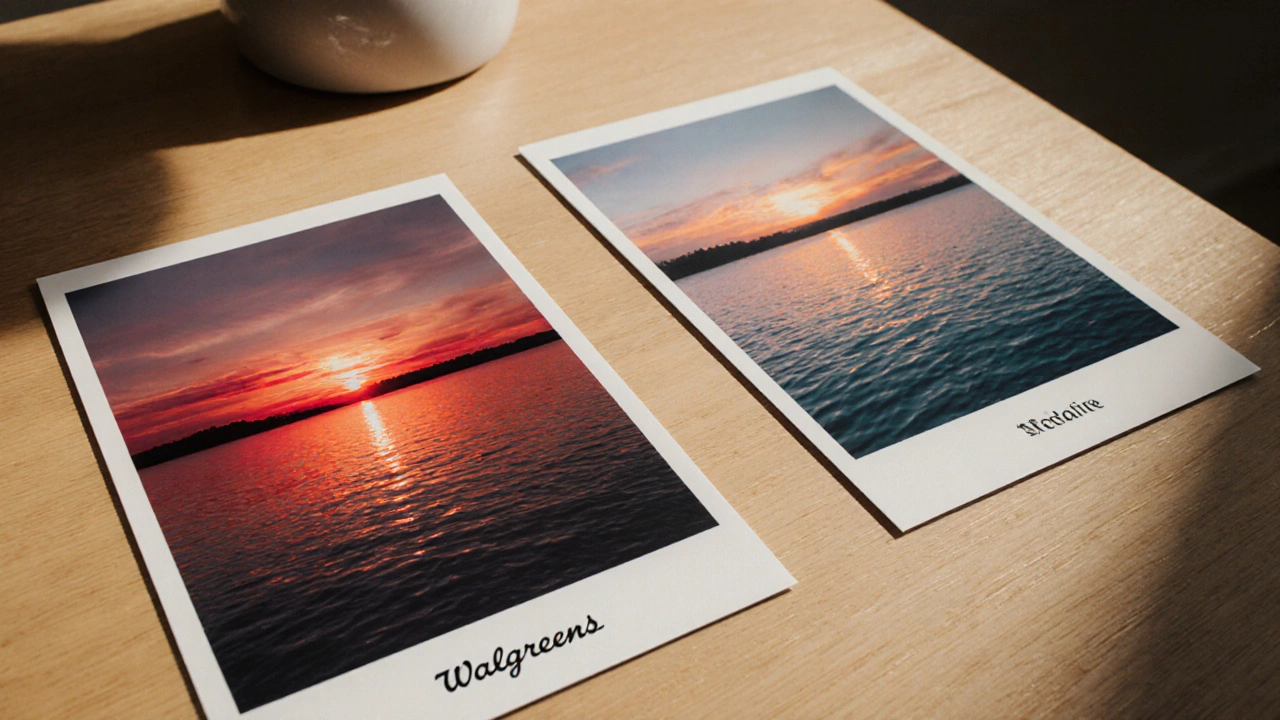
We uploaded the same 12‑MP RAW file (a sunset over the Lake District) to both stores and requested a 5 × 7 glossy print on premium paper. Here’s what we observed:
- Walgreens: The image displayed punchy reds and a smooth gradient in the sky. Fine details in the water’s ripple were discernible, and the matte gray channel kept the overall contrast balanced.
- CVS: Colors were slightly cooler; the reds leaned toward orange. The white ink helped when we printed a black‑and‑white portrait on metallic paper, but on glossy the shadows appeared a touch “washed‑out.”
When we printed the same file on a matte canvas, Walgreens’ pigment inks produced richer blacks, while CVS’s latex inks showed a subtle “grainy” texture-something you might actually like for an artistic look.

Cost, Convenience, and Other Factors
Price differences are marginal. Walgreens charges $0.29 per 4 × 6 glossy, while CVS is $0.25. Bulk discounts kick in at the 50‑print level for both. In terms of convenience, CVS typically offers a faster in‑store pickup, but Walgreens’ mobile app provides a smoother upload experience and lets you schedule a delivery to your home for free (available in most U.S. metro areas).
Verdict: Who Wins the Photo‑Print Showdown?
If razor‑sharp color fidelity and deep shadows are your top priority-think wedding photos or fine‑art prints-Walgreens edges out CVS thanks to its 12‑color pigment inks and dedicated gray channel. For quick, everyday prints where speed and a slightly lower price matter more, CVS is the pragmatic pick, especially if you love the metallic finish for holiday cards.
Both services are competent, but the subtle tech differences translate into noticeable visual outcomes when you compare side by side. Your choice should match the purpose of the print: premium display vs. casual sharing.
Tips to Get the Best Possible Prints, No Matter Where You Go
- Calibrate your source file. Adjust exposure and white balance in Lightroom or another editor before uploading; the printer can only work with what you give it.
- Choose the right paper. Glossy for vivid colors, semi‑gloss for a balanced look, metallic for holiday sparkle, and canvas for gallery‑style pieces.
- Mind the resolution. Export at 300 PPI (pixels per inch) for prints up to 8 × 10; go 600 PPI for larger formats to avoid pixelation.
- Preview the print. Both Walgreens and CVS apps offer a thumbnail preview. Zoom in to spot any undesired cropping.
- Consider a test strip. Order a single 4 × 6 on each paper type before committing to a large batch.
Which pharmacy offers a higher DPI for photo prints?
Both Walgreens and CVS list a native 2400 × 1200 dpi for their flagship printers, so in theory they can produce the same level of detail. The real difference comes from ink technology and paper handling, not DPI alone.
Is the metallic paper at CVS worth the extra cost?
Metallic paper adds a subtle sparkle that can make holiday cards pop, but it also slightly dulls deep shadows. If you want vivid color punch, the premium semi‑gloss at Walgreens might be a better bet for the same price range.
How long do prints last from each pharmacy?
Both retailers use archival‑grade pigment or latex inks that resist fading for 30 + years when displayed away from direct sunlight. The key factor is the paper; premium coated papers tend to last longer than standard glossy sheets.
Can I get canvas prints at CVS?
CVS currently does not offer canvas as a standard material; they focus on glossy, semi‑gloss, and metallic finishes. If you need canvas, Walgreens is the go‑to option.
Which service is faster for a large batch (50+ prints)?
CVS’s Latex system has a quicker curing stage, so large orders often finish a few minutes earlier than Walgreens. However, Walgreens offers a bulk‑order discount that can offset the slightly longer wait.